Fireplace Dimensions: Sizing Guide for Architects
Fireplace dimensions define the precise width, height, and depth of a fireplace, including the opening and flue proportions that shape its performance and appearance. Correct fireplace measurements are a key part of architectural planning, as they determine how well the fireplace will function, how it will fit into the space, and whether it will meet safety requirements. Selecting the right standard fireplace size allows architects to achieve a balance between efficient heating, visual harmony, and compliance with building codes.
This guide explains how precise sizing influences the core aspects of any project: it ensures the fireplace works reliably and distributes heat effectively, supports the interior design with well‑proportioned forms, prevents safety risks, and meets all necessary construction standards. A clear understanding of these principles helps create fireplaces that are both practical and visually striking.
Standard Fireplace Dimensions
In residential architecture, the opening of a fireplace typically measures 60–100 cm (24–40 in) in height and 70–150 cm (28–60 in) in width, with a firebox depth of 40–60 cm (16–24 in). Converted to metric and imperial units, this equals roughly 0.6–1.0 m by 0.7–1.5 m, or about 2–3.3 ft by 2.3–5 ft. Larger, statement fireplaces in open interiors may exceed these ranges, while compact, decorative units are much smaller. The standard fireplace dimensions depend on the type of fireplace, its purpose, and the space in which it is installed.
In the United States, architects must ensure that fireplaces comply with local building codes and national safety standards. NFPA 211 defines requirements for masonry fireplaces and chimneys, including minimum clearances from combustible materials and flue dimensions. UL‑listed installation standards apply to gas and electric fireplaces, specifying venting, insulation, and electrical safety. Observing these standards ensures that a fireplace is not only well‑proportioned and functional but also safe and compliant with all regulations.
Below is an overview of the average dimensions for different types of fireplaces, which serves as a starting point for design considerations.
| Fireplace Type | Avg. Height (cm / in) | Avg. Width (cm / in) | Avg. Height (m / ft) | Avg. Width (m / ft) |
| Wood-Burning | 80–100 cm / 32–40 in | 90–150 cm / 36–60 in | 0.8–1.0 m / 2.6–3.3 ft | 0.9–1.5 m / 3–5 ft |
| Gas | 60–90 cm / 24–36 in | 70–120 cm / 28–48 in | 0.6–0.9 m / 2–3 ft | 0.7–1.2 m / 2.3–4 ft |
| Electric | 50–80 cm / 20–32 in | 60–120 cm / 24–48 in | 0.5–0.8 m / 1.6–2.6 ft | 0.6–1.2 m / 2–4 ft |
| Ethanol | 40–70 cm / 16–28 in | 50–100 cm / 20–40 in | 0.4–0.7 m / 1.3–2.3 ft | 0.5–1.0 m / 1.6–3.3 ft |
The differences between these fireplace types are mainly in installation requirements, space consumption, and heating performance. Wood‑burning fireplaces are the most traditional, requiring a deep firebox and a chimney, and they generate significant heat. Gas fireplaces offer real flames in a slimmer format with flexible venting options. Electric fireplaces are the most compact, requiring minimal depth and no flue, making them ideal for apartments or retrofits. Ethanol fireplaces provide real fire effects with the greatest installation freedom, since they require no chimney or venting, but they are primarily decorative with lower heat output.
The next sections will explore Gas Fireplace Dimensions, Electric Fireplace Dimensions, Wood‑Burning Fireplace Dimensions, and Ethanol Fireplace Dimensions, giving architects and designers practical reference points for each category.
Gas Fireplace Dimensions
Gas fireplaces typically feature openings of 60–90 cm (24–36 in) in height and 70–120 cm (28–48 in) in width, with firebox depths of 35–50 cm (14–20 in). In metric and imperial units, this is roughly 0.6–0.9 m by 0.7–1.2 m, or 2–3 ft by 2.3–4 ft. This slimmer structure allows installation in shallow wall cavities or as part of media walls without the space demands of a masonry chimney. They bring the warmth and visual appeal of real flames in a format that is easier to integrate than traditional wood‑burning models.
From a technical perspective, gas fireplaces are categorized as direct‑vent, vent‑free, or B‑vent. Direct‑vent models are the most common in residential design, requiring only a modest cavity and flexible venting to the exterior. Vent‑free units can be mounted in very shallow walls, while B‑vent systems require additional vertical clearance for exhaust. When designing gas fireplaces for U.S. projects, compliance with local building codes, NFPA 211, and UL‑listed installation standards is essential. These regulations define safe distances from combustible materials, framing requirements, and venting clearances. Manufacturers’ installation manuals provide the precise specifications required to pass inspection and ensure safe operation.
As a practical example, Planika’s Galaxy 1150 Burner illustrates the compact form factor of modern outdoor vent‑free gas fireplaces. It measures 1 150 mm wide, 343 mm high, and 350 mm deep (about 45.3 in × 13.5 in × 13.8 in), delivering a continuous open flame that fits easily into outdoor media walls, terraces, and architectural niches without the depth or structural complexity of a traditional wood‑burning hearth. Larger panoramic models, such as the Galaxy 2000, extend beyond 2 m (6 ft) in width, creating dramatic linear fire features while maintaining a shallow profile suited to exterior wall cavities and landscape designs.
Electric Fireplace Dimensions
Typical electric fireplaces measure 50–80 cm (20–32 in) in height and 60–120 cm (24–48 in) in width, with depths of 15–30 cm (6–12 in). In broader terms, this equals roughly 0.5–0.8 m by 0.6–1.2 m, or 1.6–2.6 ft by 2–4 ft. Their shallow footprint allows easy surface mounting or recessing into standard stud walls without major structural work. Electric fireplaces deliver the visual appeal of dancing flames without the need for a chimney, gas connection, or wood storage. They are inherently slim, making them ideal for apartments, modern media walls, and spaces where traditional venting is not possible.
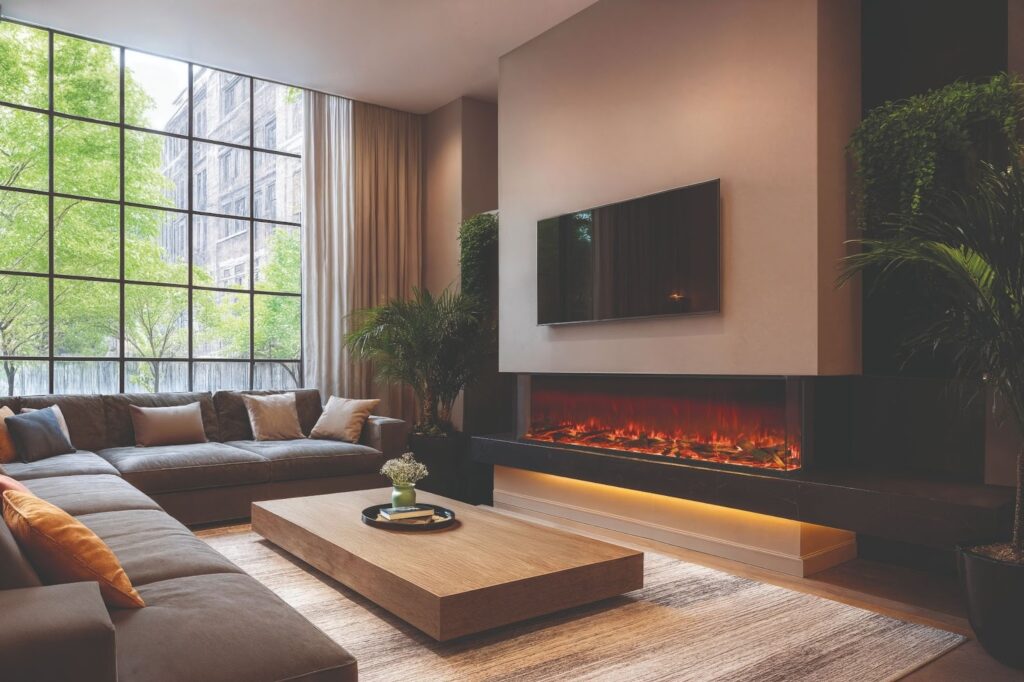
From a technical standpoint, electric fireplaces are divided into wall‑mounted, recessed, and built‑in insert formats. Since they do not produce combustion gases, their primary installation considerations in the United States involve UL‑listed electrical safety compliance and adherence to local building codes regarding outlet placement, ventilation, and distances from combustible surfaces. Most models only require a standard power connection, and some include optional heating functions that distribute warmth through convection or infrared panels.
Because of these compact proportions, a 60–80 cm‑wide electric fireplace can slot neatly beneath a wall‑mounted television in a media wall, while wider linear units up to 120 cm suit feature walls that stretch across open‑plan living rooms, dining areas, or loft apartments. Shallow 15–20 cm depths allow units to recess fully inside a 2 × 4 stud cavity, making them practical for condo retrofits, bedrooms where floor space is tight, and hotel guest rooms that need a decorative focal point without structural alterations. Portrait‑style models at the smaller end of the range often replace unused masonry hearths, whereas the largest widths create eye‑catching room dividers or long ribbon flames below shelving in modern great rooms, all without encroaching on valuable floor area.
Wood‑Burning Fireplace Dimensions
Typical wood-burning fireplaces measure 80–120 cm (32–48 in) in height and 90–150 cm (36–60 in) in width, with firebox depths of 45–60 cm (18–24 in). In broader terms, this translates to 0.8–1.2 m by 0.9–1.5 m, or roughly 2.6–4 ft by 3–5 ft, making them significantly larger and deeper than gas or electric alternatives. Wood‑burning fireplaces offer the traditional experience of real logs, crackling flames, and natural heat but come with greater structural and spatial demands. They require a chimney or flue system for safe venting, a larger firebox to handle solid fuel, and sufficient clearance from combustible materials.
From a technical perspective, wood‑burning fireplaces in the United States must comply with NFPA 211 standards and local building codes, which dictate chimney height, flue size, and safe clearances from combustible framing. Adequate hearth extension is also required to protect flooring from sparks and embers. Modern inserts and factory‑built metal fireboxes often reduce installation complexity but still demand proper venting and structural support.
A typical built‑in wood fireplace might measure around 1000 mm wide, 850 mm high, and 500 mm deep (about 39 in × 33 in × 20 in), dimensions that reflect the space needed for logs, airflow, and safe ember containment. While exact sizing varies by design, traditional wood fireplaces are always deeper than electric or gas units due to the combustion chamber and flue requirements. Wood‑burning fireplaces with these proportions are best suited to large living rooms, open‑plan spaces, and homes where a masonry chimney can be accommodated. They provide authentic heat and atmosphere but require more planning for safety, maintenance, and structural integration.
Ethanol Fireplace Dimensions
Ethanol fireplaces typically feature low openings of 20–30 cm (8–12 in) in height and 60–200 cm (24–79 in) in width, with slim depths of 25–35 cm (10–14 in). In broader terms, this translates to roughly 0.2–0.3 m by 0.6–2.0 m, or 0.7–1 ft by 2–6.5 ft. Their compact profiles allow easy integration into modern walls, furniture elements, and room dividers without the structural requirements of a masonry chimney. Ethanol fireplaces provide the appeal of real flames without the need for a chimney, gas line, or wood storage.
From a technical standpoint, ethanol fireplaces like those in Planika’s portfolio often utilize BEV® (Burning Ethanol Vapors) technology, which vaporizes the fuel before ignition to produce a cleaner, controlled flame. Although vent‑free, U.S. projects must still comply with local fire and building codes, which dictate minimum room volumes, safe distances from combustible materials, and proper ventilation.
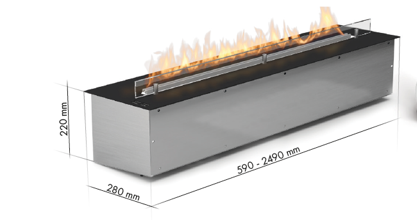
As an illustrative example, Planika’s FLA4 1190 ethanol burner measures 1190 mm wide, 220 mm high, and 280 mm deep (approximately 46.9 in × 8.7 in × 11.0 in). Larger models in the same series, such as the FLA4 1990, extend up to 1990 mm (78.3 in) in width while keeping the same low height and shallow depth. These proportions exemplify how ethanol fireplaces can achieve a linear flame effect within very thin cavities, enhancing contemporary interiors without heavy construction. Ethanol fireplaces with these dimensions are well‑suited to living rooms, hotel lobbies, and feature walls where visual impact and installation flexibility are key. They deliver authentic flames and a modern design statement while remaining lightweight and vent‑free.
What Is a Standard Width of a Fireplace?
A standard residential fireplace is typically 90–120 cm (36–48 in) wide, or roughly 0.9–1.2 m, 3–4 ft, depending on the design and fuel type. This measurement sets the foundation for visual balance and installation requirements in any feature wall or living space. Traditional wood‑burning fireplaces fall within this core range, while larger masonry hearths for great rooms can reach 150 cm (60 in, 5 ft). Gas fireplaces are often designed in a more linear format, ranging from 70 cm to 120 cm (28–48 in) for standard models and up to 200 cm (79 in, 6.5 ft) for panoramic designs. Electric fireplaces are slim and modular, commonly measuring 60–120 cm (24–48 in), allowing them to fit into stud walls or recessed media panels with minimal structural work. Ethanol fireplaces, which require no chimney or heavy framing, are the most flexible, starting around 60 cm (24 in) and extending beyond 200 cm (79 in, 6.5 ft) to accommodate wide, contemporary layouts.
What Is an Average Depth of a Fireplace?
The average depth of a residential fireplace is 35–50 cm (14–20 in), or roughly 0.35–0.5 m, 1.1–1.6 ft, depending on the fuel type and installation method. This measurement is crucial because it affects both the firebox efficiency and the space required in the wall cavity. Traditional wood‑burning fireplaces are usually the deepest, with typical firebox depths of 45–55 cm (18–22 in) to ensure proper draft and smoke evacuation through the chimney. Gas fireplaces are shallower, averaging 35–50 cm (14–20 in), which allows them to be integrated into media walls or room dividers without large masonry structures. Electric fireplaces are the most compact, often 15–30 cm (6–12 in) deep, and can be surface‑mounted or recessed into standard stud walls with minimal framing. Ethanol fireplaces, thanks to vent‑free BEV technology, can be similarly slim, averaging 20–30 cm (8–12 in) while still creating a wide flame presentation. In U.S. projects, local building codes and NFPA 211 guidelines determine the minimum depth and clearances for wood‑burning models, while UL‑listed installation instructions guide safe placement for gas and electric units.
What Is a Recommended Height from Floor of a Fireplace?
The recommended height for the base of a fireplace opening is typically 30–45 cm (12–18 in) above the finished floor, or roughly 0.3–0.45 m, 1–1.5 ft, depending on the fireplace type and room layout. This height ensures comfortable viewing from a seated position, provides safe clearance from flooring materials, and allows integration with mantels or media walls. Traditional wood‑burning fireplaces are usually set 30–40 cm (12–16 in) above the floor to maintain the look of a classic hearth and to simplify log loading. Gas fireplaces, especially linear wall‑mounted designs, are often positioned higher, around 40–60 cm (16–24 in), to align with eye level in living areas or to create a floating aesthetic. Electric fireplaces offer the most flexibility; they can start 20–30 cm (8–12 in) from the floor for low media walls or be mounted at 75–90 cm (30–36 in) for a contemporary “floating” installation. Ethanol fireplaces follow similar principles, and thanks to their vent‑free design, they can be installed at virtually any height that satisfies local safety clearances.
What Are the Typical Fireplace Openings and Firebox Sizes?
Typical fireplace openings range from 60 cm to 120 cm (24–48 in) in width and 40 cm to 90 cm (16–36 in) in height, while firebox depths usually fall between 30 cm and 60 cm (12–24 in), depending on the fuel type and design. These dimensions define how the flame is displayed, how efficiently heat is distributed, and how the unit can be integrated into a wall or mantel. Wood‑burning fireplaces are traditionally the largest, as they must accommodate logs and ensure proper draft. Their openings typically span 90–120 cm (36–48 in) wide and 60–90 cm (24–36 in) high, with firebox depths of 40–60 cm (16–24 in) to allow safe combustion and smoke evacuation. Gas fireplaces feature slimmer fireboxes and openings, which makes them easier to integrate into modern interiors. Standard dimensions are 70–120 cm (28–48 in) wide, 40–60 cm (16–24 in) high, and 30–50 cm (12–20 in) deep, allowing installation in relatively shallow wall cavities. Electric fireplaces are the most compact, as they require no venting. Openings generally measure 60–120 cm (24–48 in) in width and 40–70 cm (16–28 in) in height, with fireboxes as shallow as 15–25 cm (6–10 in), making them ideal for apartments or lightweight feature walls. Ethanol fireplaces are the most flexible, especially in linear formats. Openings can start at 60 cm (24 in) wide and extend beyond 200 cm (79 in, 6.5 ft), often with depths under 30 cm (12 in). Their compact structure and vent‑free design allow installation in media walls, room dividers, or even custom furniture features.
How Customizable Are Fireplace Size Dimensions?
Fireplace dimensions are highly customizable: most manufacturers let you alter width, height, and depth within practical limits, generally from about 60 cm to 300 cm (24 in to 10 ft) in width, provided the design still meets local codes and clearance rules. Custom masonry builders can size wood‑burning fireboxes to suit a room, modular gas units are often available in 10‑ to 30‑cm (4‑ to 12‑in) increments, vent‑free ethanol burners can be linked to create flame lines stretching beyond two metres (6.5 ft), and electric inserts typically come in half‑metre (18‑ to 24‑in) steps for a precise wall‑to‑wall fit. The main constraints are safety regulations such as NFPA 211 for wood, UL listings for gas and electric, and minimum‑room‑volume guidelines for ethanol, along with structural factors including flue diameter, wall depth, and load‑bearing capacity. Within those boundaries, architects can tailor a fireplace to almost any interior concept, whether that is a compact 70 cm (28 in) apartment insert or a gallery‑spanning 250 cm (8 ft) linear centerpiece.
What is the minimum clearance for a fireplace?
The minimum safe clearance for a residential fireplace is generally about 150 mm (6 in) on the sides and above the firebox, yet the precise distance depends on fuel type and local code. Wood‑burning masonry fireplaces must keep at least 25 mm (1 in) of air space between brickwork and any wood framing and include a non‑combustible hearth that projects 400 mm (16 in) in front of the opening and 200 mm (8 in) beyond each side, as set out in NFPA 211. Factory‑built wood units follow their UL listings, typically calling for 50–75 mm (2–3 in) to framing plus the same hearth extension. Gas fireplaces usually need 25–50 mm (1–2 in) from their firebox to adjacent framing, along with extra space around the vent pipe specified in the installation guide. Electric fireplaces run cooler and often permit placement as close as 0–25 mm (0–1 in) to surrounding studs, provided ventilation slots stay clear. Ethanol models that rely on open burners require about 200 mm (8 in) above the flame and unobstructed air on all sides, but units that use Planika’s BEV technology—where liquid ethanol is first vaporised for a cleaner, cooler burn—can safely reduce side clearances to roughly 100 mm (4 in) while still maintaining at least 400 mm (16 in) overhead. Always confirm exact figures in the manufacturer’s instructions and local building regulations before finalising any design.
How to Measure Fireplace Dimensions?
Measure a fireplace by taking its width, height, and depth in a set order that covers the opening, hearth, mantel, and flue, ensuring every code‑relevant detail is captured. Getting precise measurements is the first task in any fireplace project. A steel tape, a small spirit level, and a notepad (or phone) are all you need, but the order in which you record dimensions matters. Follow the four‑step sequence below; it captures every figure an architect, dealer, or installer will ask for and keeps you aligned with building‑code checklists..
1. Front opening and firebox envelope
Stand in front of the hearth and measure the clear width between the inner jambs, the height from the finished hearth to the underside of the lintel, and the depth from the front edge of the firebrick floor to the rear wall. Write these three numbers side by side because together they define the maximum insert or grate size.
2. Rear width, hearth projections, and side extensions
Many masonry fireboxes taper, so place the tape at the back wall and record that inside width. Next, measure how far the non‑combustible hearth projects into the room and how much it extends beyond each jamb. Most codes require at least 400 mm (16 in) in front and 200 mm (8 in) at both sides, so comparing actual projections with those targets tells you immediately if the hearth needs enlarging.
3. Mantel height, shelf depth, and chase or flue dimensions
From the finished floor, note the vertical distance to the underside of any mantel shelf, then measure the shelf’s depth. Clearance tables in NFPA 211 and UL listings relate directly to these two numbers. If the fireplace is factory‑built, measure the stud‑cavity depth behind the unit to be sure a replacement insert or electric upgrade will recess flush. For masonry systems, record the internal width and depth of the flue or throat just above the damper so that any new liner or cap can be sized correctly.
4. Level, plumb, and photographic record
Place a spirit level on the hearth to confirm it is flat, then check one side wall for plumb. Even a small lean can complicate surround installation or trimming. Finally, photograph each dimension with the tape in view; digital images serve as a shared reference for designers, suppliers, and inspectors long after the initial site visit.
Completing these four steps gives you a full dimensional profile: front and rear widths, opening height, firebox depth, hearth extensions, mantel clearances, cavity or flue size, and verified alignment. With that information in hand, you can choose a fireplace or insert that fits the existing structure, meets code, and leaves enough room for finishing materials and decorative panels.
FAQ about Fireplace Dimensions
Understanding fireplace dimensions is essential for anyone planning a hearth, whether it is a compact electric insert or a full‑scale masonry centerpiece. The right measurements ensure safe clearances, comfortable viewing height, and balanced proportions within the room. In the answers that follow, we look at the space required around a fireplace, discuss whether a room can be too small for one, and explain how dimensions change with fuel type. We also compare modern linear formats with traditional hearth shapes, outline the sizes most often specified in architectural projects, and clarify how international and metric standards guide design decisions.
How much space is needed around a fireplace?
A safe residential fireplace generally needs at least 150 mm (6 in) of clearance on the sides and above the firebox, along with a non‑combustible hearth that extends roughly 400 mm (16 in) in front of the opening and 200 mm (8 in) beyond each jamb. Clearances tighten or relax depending on fuel and construction. Traditional wood‑burning masonry hearths keep an air gap of 25 mm (1 in) between brickwork and framing and follow the full hearth projection noted above, while factory‑built wood units rely on their UL listings, which often call for 50–75 mm (2–3 in) of side and rear clearance. Direct‑vent gas fireplaces typically need 25–50 mm (1–2 in) around the chassis and additional space for vent pipes, whereas electric models, which run cooler, may sit as close as 0–25 mm (0–1 in) to framing as long as air inlets and outlets remain unobstructed. Vent‑free ethanol units require about 400 mm (16 in) of vertical clearance above the flame; those using BEV technology can reduce side clearance to about 100 mm (4 in) while still keeping the 400 mm (16 in) overhead buffer. Local building codes and the manufacturer’s installation manual always override generic figures, so verify requirements before finalising the design or construction details.
Can a room be too small for a fireplace?
Yes, a room can be too small for certain types of fireplaces because building codes and manufacturers specify minimum room volumes to ensure safe combustion, adequate ventilation, and manageable heat output. Wood‑burning and vented gas units consume oxygen and release exhaust, so codes such as NFPA 211 often require a space of at least about 25 m³ (900 ft³) or additional make‑up air provisions; installing a large hearth in a bedroom or study smaller than that can lead to smoke spillage, negative pressure, or overheating. Vent‑free gas appliances and open‑burner ethanol models have still tighter limits, typically needing 25 m³ (882 ft³) or more and at least one permanently open air vent, otherwise carbon monoxide and humidity levels may rise beyond safe thresholds. Electric fireplaces pose the fewest restrictions because they produce no combustion gases and let you dial back heat output, making them suitable for compact flats or attic rooms as small as 10 m² (100 ft²) provided clearances for air intakes and outlets are met. Always check the product’s installation manual and local building regulations before specifying a unit; if the room volume falls below the minimum, you will need either a smaller, low‑output model, a balanced flue system, or a dedicated supply air duct to maintain safe indoor conditions.
How do fireplace dimensions vary by fuel type?
Fireplace dimensions vary by fuel type, with wood models requiring the most depth, gas models fitting medium cavities, and electric or ethanol fireplaces being the slimmest due to minimal or no venting needs. A traditional masonry wood fireplace often spans 90–120 cm (36–48 in) across the opening, stands 60–90 cm (24–36 in) high, and reaches 40–60 cm (16–24 in) into the wall to give logs room to burn and smoke room to draft. Gas fireplaces reduce depth to roughly 30–50 cm (12–20 in) while keeping widths in the 70–120 cm (28–48 in) range and heights around 40–60 cm (16–24 in), making them easier to recess into stud framing. Electric inserts are engineered for tight spaces, so they typically measure 60–120 cm (24–48 in) wide, 40–70 cm (16–28 in) high, and only 15–25 cm (6–10 in) deep, allowing installation almost flush with standard drywall. Vent‑free ethanol systems have the narrowest height requirement—often just 20–30 cm (8–12 in)—and can start at 60 cm (24 in) wide but extend beyond 200 cm (79 in) when multiple linear burners are joined, all while staying under 30 cm (12 in) in depth because no flue is required. These dimensional differences arise from each fuel’s combustion needs, ventilation demands, and heat output, so selecting the right type depends on how much wall depth, clearance, and visual emphasis your project allows.
What are typical dimensions in architectural projects?
Architects usually specify a fireplace opening around 100 to 120 cm (40 to 48 in) wide, 60 to 80 cm (24 to 32 in) high, and 40 to 50 cm (16 to 20 in) deep, dimensions that balance code requirements with comfortable viewing and efficient heat circulation. In contemporary projects, gas or electric models often expand the width to 120 to 180 cm (48 to 72 in) while trimming height to about 35 to 45 cm (14 to 18 in) and depth to 25 to 35 cm (10 to 14 in) so the unit can recess into a standard stud wall. Historic restorations or traditional designs keep the boxier profile of wood‑burning fireboxes, typically 90 to 120 cm (36 to 48 in) wide, 70 to 90 cm (28 to 36 in) high, and 45 to 60 cm (18 to 24 in) deep to meet draft and clearance needs. Across all project types, clearances to combustibles and hearth projections follow local building codes, NFPA 211 guidelines, and UL listings, ensuring the specified dimensions work safely within the given room volume and wall construction.
What are international and metric standards?
International and metric standards for fireplaces define the required dimensions, hearth projections, and safety clearances using metric measurements to ensure proper installation and fire safety. In the United States, these standards are expressed in imperial units through NFPA 211 and the International Residential Code (IRC), which require a non-combustible hearth to project 406 mm (16 in) in front and 203 mm (8 in) on each side for smaller openings, with larger projections for fireboxes over 0.56 m² (6 ft²). Metric-based European regulations typically follow EN or ISO guidelines and specify hearth extensions, minimum wall clearances, and air gaps between masonry and combustible framing. Factory-built fireplaces comply with UL or ANSI listings in the U.S. and CE certification in Europe, allowing manufacturers to provide both imperial and metric fireplace measurements that meet international inspection and safety requirements.
Design Your Ideal Fireplace with Planika
Designing your ideal fireplace with Planika begins by mastering fireplace dimensions, the width, height, and depth that govern both performance and visual balance. Accurate fireplace measurements let you place the flame at a comfortable eye level, shield nearby finishes, and satisfy U.S. codes such as NFPA 211 and the International Residential Code. Once you understand the standard fireplace size ranges for wood, gas, electric, and ethanol models, navigating Planika’s catalog becomes straightforward. A wood‑burning hearth may require a deeper cavity to feed logs and maintain draft, whereas a BEV ethanol insert can remain under twelve inches deep yet span two meters in width, providing a continuous ribbon of flame without a flue.
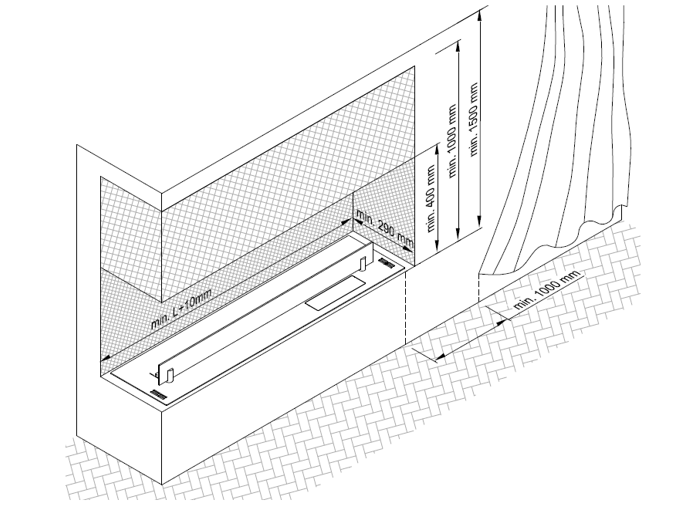
Planika structures every product around practical size brackets, allowing architects to translate concept sketches into precise framing plans without guesswork. Linear gas units fit into six‑inch stud walls, modular ethanol burners can link end to end for custom panoramas that still meet minimum room‑volume rules, and electric inserts supply the shallowest profiles for media walls while offering realistic flames and adjustable heat. Detailed cut sheets accompany each model, so wall depth, vent routes, and service access can be mapped before construction begins, ensuring a smooth installation of mantels, stone cladding, or freestanding surrounds.
Pair reliable fireplace measurements with Planika’s fuel‑specific design guidance and you will create a feature tailored to the room, complementing the interior style while delivering dependable warmth or ambience. Ready to turn your dimensions into a statement piece? Explore Planika’s full range and start specifying your perfect fireplace today.