
Fireplace Maintenance: Importance, Cost & How to Maintain

Fireplace maintenance is the regular inspection, cleaning, and servicing required to keep a fireplace safe, efficient, and compliant with safety standards. The exact maintenance steps depend on the type of fireplace. Wood‑burning fireplaces need chimney sweeping to remove creosote and ash buildup. Gas fireplaces require annual checks of burners, vents, and safety sensors to prevent leaks or blockages. Planika BEV® (Burning Ethanol Vapors) fireplaces produce clean combustion with no residue or soot, eliminating the need for chimney sweeping but occasional inspection ensures all electronic and safety components operate properly.
Dirty chimneys and neglected fireplaces account for 3 in 10 (≈30 %) of U.S. home‑heating fires, according to the National Fire Protection Association (NFPA) data summarized by the Environmental Protection Agency (EPA, 2024). For that reason, every fireplace, chimney, and vent should be professionally inspected at least once a year. Using an NFI-certified technician gives homeowners confidence that venting, combustion, and safety systems are evaluated to industry best practices.
What maintenance does a fireplace need?
All fireplaces need at least one professional inspection a year; beyond that, wood-burning units require chimney sweeping, gas units need burner, vent, and safety system checks, ethanol models need functional and safety-component verification, and electric or other clean-fuel units generally only need occasional electrical and control checks.
Wood-burning fireplaces require annual inspection and sweeping to remove creosote, the combustible residue that accumulates in the flue, and to confirm that the chimney structure, damper, firebox, and cap are sound and unobstructed. Neglecting that increases fire risk and degrades draft performance. Gas fireplaces should be serviced yearly to clean and inspect burners, test ignition systems and safety interlocks, verify that venting is clear, and check for leaks or pressure irregularities in fuel delivery. Ethanol fireplaces do not produce creosote, but they benefit from periodic cleaning of visible surfaces, correct refilling procedures, and professional checks of electronic safety systems, seals, and fuel delivery mechanisms to catch wear or sensor drift before it affects safe operation. Advanced systems using technologies like BEV® add a layer of protection by sealing the combustion chamber and integrating real-time safety monitoring, further reducing routine residue-related work while still relying on occasional professional validation. Electric and other low-residue units carry the lightest maintenance burden: occasional inspection of electrical connections, replacement of aging heating or lighting elements if needed, and verification that controls, thermostats, and any fans function properly.
In every case homeowners should keep the area around the fireplace clear, visually inspect gaskets, seals, and external finishes, perform basic user-level upkeep between professional visits, wiping glass, removing dust or ash, and ensuring vents/intakes aren’t blocked, and respond early to warning signs like uneven flames, odd odors, or changes in heat output. Following manufacturer guidelines and using qualified technicians preserves safety, efficiency, and longevity.
What’s the Importance of Fireplace Maintenance?
Fireplace maintenance is essential because it cuts a major source of preventable risk, preserves efficiency, and protects value. Heating equipment caused about 13% of U.S. home structure fires in 2016-2020, and roughly 29% of those heating-equipment fires involved fireplaces or chimneys, per NFPA data. A leading contributing factor in heating-related fires is failure to clean, especially with solid-fuel systems where neglected chimneys (creosote buildup, blockages) show up as about 25% of heating fire causes in some state-level analyses. Regular professional inspection at least once a year helps catch draft problems, buildup, leaks, or malfunctioning safety interlocks before they escalate into flames, carbon monoxide incidents, or costly repairs. Consistent upkeep also maintains combustion efficiency (lowering fuel waste), supports insurance compliance or claims validity, and extends the usable life of the appliance. Early detection of small issues avoids emergency service calls and preserves indoor air quality and comfort.
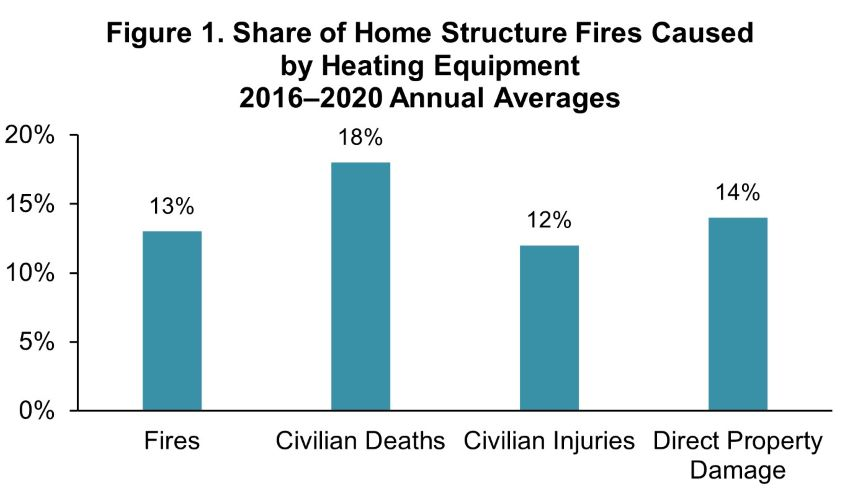
Figure 1. Heating equipment is a significant cause of residential fires in the United States. Between 2016 and 2020, heating equipment accounted for 13% of home structure fires, 18% of civilian deaths, 12% of injuries, and 14% of direct property damage annually.
Source: National Fire Protection Association (NFPA) – Heating Equipment Reports
How to Tell if My Fireplace Needs Cleaning?
Common warning signs include a persistent smoky odor in the room, visible soot or shiny creosote deposits on the firebox or damper, and smoke backing into the living space instead of venting freely. You might also notice that fires are harder to start or keep burning, debris such as flue tile fragments, leaves, or animal nests falls into the firebox, or excessive ash and dust accumulate over time. In some cases, walls or glass doors develop dark stains, a clear indicator of incomplete combustion and a dirty flue.
Spotting any of these symptoms means it’s time to schedule a professional inspection and cleaning to ensure safe and efficient operation. In the following sections, we will discuss each of these symptoms in detail, starting with the most common ones.
1. Persistent Smoky Odor
If your room smells like smoke even when the fireplace is not in use, it usually means creosote has built up inside the chimney or flue. This residue not only causes unpleasant odors but is also highly flammable, significantly increasing the risk of a chimney fire. Smoky smells can also indicate poor draft or partial blockages in the venting system.
2. Visible Soot or Creosote Deposits
Dark, flaky soot and shiny black creosote on the walls of your firebox, damper, or chimney are clear warning signs. Creosote forms naturally in wood-burning fireplaces when unburned particles and vapors condense inside the chimney. If left uncleaned, this residue can ignite at very high temperatures, causing a dangerous chimney fire. Ethanol and gas fireplaces produce far less buildup, but they should still be checked for dust, residue, or vent blockages.
3. Smoke Backing into the Room
One of the clearest signs that your fireplace needs attention is smoke entering your living space instead of rising smoothly through the chimney. This can happen if the flue is blocked by soot, creosote, animal nests, or other debris. Poor airflow caused by negative indoor pressure or a partially closed damper can make the problem worse. Inhaling this smoke is not only unpleasant but also exposes you to harmful particles and increases the risk of carbon monoxide buildup.
4. Difficulty Starting or Maintaining Fires
If your wood-burning fire struggles to ignite, burns weakly, or extinguishes quickly, it could be due to restricted airflow from a dirty chimney. Excessive ash buildup or creosote deposits limit oxygen supply to the fire. In gas or ethanol fireplaces, a weak or flickering flame may indicate blocked burners, dirty pilot components, or dust accumulation affecting air intake. Addressing these issues with proper cleaning and inspection restores safe and efficient operation.
5. Falling Debris or Animal Nests
If you notice pieces of flue tile, crumbling brick, leaves, or nesting materials in your firebox, it’s a clear sign that your chimney has internal damage or an obstruction. Birds, squirrels, and raccoons often enter unused chimneys to build nests, which block proper ventilation and can ignite during a fire. Even ethanol or gas fireplaces with exterior vents can collect windblown debris that needs removal.
6. Excessive Ash or Dust Buildup
A fireplace filled with ash, dust, or other residue not only looks neglected but also affects performance. Ash can absorb moisture, leading to corrosion in metal components, while excessive buildup can restrict airflow in wood-burning systems. Regular removal of ash and light surface cleaning after each use help prevent larger issues and make annual maintenance easier.
7. Dark Stains on Walls or Glass Doors
Brown or black streaks around the fireplace opening or on glass doors indicate incomplete combustion and a dirty chimney. These stains are often caused by creosote deposits, backdrafting smoke, or poor ventilation. Left unaddressed, the same buildup responsible for these stains can lead to chimney fires or reduced indoor air quality.
How to Maintain a Gas Fireplace
Gas fireplaces are a popular choice for homeowners who value convenience, efficiency, and a clean-burning flame without the mess of traditional wood. Although they require less upkeep than wood-burning models, proper maintenance is still essential to keep them safe, reliable, and performing at their best. A complete care routine can be divided into daily, seasonal, and annual tasks, and it should always begin with a review of the manufacturer’s instructions, since each model may have unique components and service requirements.
Daily Maintenance
Daily maintenance is focused on simple checks that ensure the fireplace is ready for use. Before turning it on, it is a good habit to look through the glass front and confirm that the burners, logs, and interior surfaces are free of dust and debris. Observe the flame carefully to see whether it burns steadily and evenly, and make sure the pilot light or electronic ignition system starts without hesitation. Any faint gas odor, dark streaks on the glass, or soot accumulation are clear signs that the fireplace should be cleaned or inspected before the next use. Establishing this short routine helps prevent small issues from turning into major safety concerns.
Seasonal Maintenance
Seasonal maintenance is usually performed at the beginning and the end of the heating season. At these times, the fireplace should be thoroughly cleaned and inspected to prepare it for months of regular operation or to ensure it is safely shut down during warmer weather. The glass doors or panels can develop a light film or haze from regular use, and they should be cleaned with a fireplace-approved, non-abrasive cleaner to restore full visibility of the flame. The area around the burners, logs, and pilot assembly often collects dust, cobwebs, or pet hair, which can affect the quality of combustion if left unchecked. Seasonal care should also include verifying that smoke and carbon monoxide detectors in the home are working properly and visually checking the outdoor venting system to ensure it is clear of leaves, nests, or other debris that may have built up during storms or long periods of non-use.
Annual Maintenance
Annual maintenance is the most thorough step and should always be performed by a qualified, certified technician. Once a year, a professional will examine all gas connections for leaks, clean the burner and pilot assembly, and confirm that the flame pattern meets safety and efficiency standards. They will also check the venting system for corrosion, cracks, or partial blockages that could lead to dangerous backdrafting. Modern gas fireplaces are equipped with several safety features, such as oxygen depletion sensors and automatic shut-off mechanisms, and a professional inspection ensures that each of these systems works correctly. A proper annual service not only reduces the risk of gas leaks and carbon monoxide exposure but also helps the fireplace operate efficiently for many years.
Gas Fireplace Maintenance Checklist
| Frequency | Checklist Items |
| Daily / Before Use | • Check glass and burners for dust or debris• Observe flame and pilot light• Watch for gas odor or visible soot |
| Seasonal | • Clean glass with non-abrasive cleaner• Vacuum around burners and logs• Test smoke and CO detectors• Inspect outdoor vent for leaves or blockages |
| Annual (Professional) | • Inspect gas lines for leaks • Clean burner and pilot assembly • Check venting system for cracks or corrosion • Test all safety features |
How to Maintain an Electric Fireplace?
Electric fireplaces are the easiest type to maintain because they produce no smoke, ash, or creosote. However, “low‑maintenance” doesn’t mean “maintenance‑free.” Dust buildup, restricted airflow, and worn electrical components can still reduce performance or pose a safety risk. By following a regular care routine, you can extend the life of your fireplace and keep the flame effects bright and realistic.
Daily / Regular Use
During everyday use, the focus is on quick visual checks and keeping the exterior clean. Before switching on the fireplace, inspect the glass panel and vents for any visible dust or debris. Even a thin layer of dust can reduce airflow over time. Wipe the glass and the exterior surfaces with a soft, dry cloth to prevent buildup, and make sure the power cord is securely plugged in and free from damage. Observing the flame effect each time you use the unit is also important, as any sudden flickering or dimming may indicate that the interior needs attention.
Seasonal Maintenance
At the start and end of the heating season, a more thorough cleaning ensures your fireplace runs smoothly. Always unplug the unit before cleaning. Use a vacuum with a soft brush attachment to remove dust from air intake vents, the fan area, and around the heating element. Clean the glass with a non‑abrasive cloth to keep the flame effect clear and vibrant. During this seasonal check, also verify that vents and air intake areas remain unobstructed by furniture, curtains, or wall fixtures, since airflow is crucial for safe operation.
Occasional / Annual Checks
While electric fireplaces do not need professional servicing as frequently as wood‑burning or gas units, performing an annual inspection is highly recommended. Look for loose power cords, frayed plugs, or any discoloration near the outlet that could indicate electrical wear. Turn on the fireplace and listen for unusual fan noises like rattling or humming, which may suggest dust buildup or a worn motor. If your unit uses LED bulbs or light modules, check them and replace any that appear dim or burned out. Finally, confirm that the unit sits on a stable, level, and dry surface, reducing the risk of vibrations and overheating.
Electric Fireplace Maintenance Checklist
| Frequency | Checklist Items |
| Daily / Regular Use | • Check glass and vents for visible dust or debris• Wipe exterior with a soft, dry cloth• Ensure the power cord is secure and undamaged• Observe flame effect for flickering or dimming |
| Seasonal Maintenance | • Unplug and vacuum vents and fan area• Clean glass with a non‑abrasive cloth• Check that vents and air intakes are unobstructed• Verify the unit is on a stable, dry surface |
| Occasional / Annual | • Inspect power cord and plug for wear• Listen for unusual fan noises• Replace dim or burned‑out LED bulbs (if applicable)• Confirm the unit operates smoothly and safely |
Electric vs. Gas and Wood Fireplace Maintenance
Maintaining an electric fireplace is significantly simpler than caring for gas or wood‑burning models. Unlike wood‑burning fireplaces, electric units do not produce ash, soot, or creosote, which means there is no need for chimney sweeping or concern about flue blockages. They also eliminate the risk of smoke entering the living space and dramatically reduce the likelihood of fire hazards linked to combustible buildup.
Compared to gas fireplaces, electric models also have fewer moving parts and no open flame or gas lines that require leak inspections. Gas fireplaces need annual checks of burners, pilot lights, safety sensors, and venting systems to ensure safe operation. In contrast, electric fireplaces mainly require periodic dusting of vents and fans, cleaning the glass, and ensuring that the power cord and internal components remain in good condition.
This simplicity makes electric fireplaces a low‑maintenance option for homeowners who want ambiance and supplemental heat without the rigorous upkeep of traditional units. Still, occasional inspection and cleaning are essential to keep the fan, lights, and heating elements functioning efficiently and to extend the appliance’s lifespan.
How to Maintain a Wood‑Burning Fireplace
Wood‑burning fireplaces offer the classic warmth, crackle, and aroma of a real fire, but they also demand the most attentive care. Unlike gas or electric models, they produce ash, soot, and creosote, which can build up quickly and create both efficiency and safety concerns. Proper maintenance is essential to prevent chimney blockages, reduce smoke in your living space, and avoid dangerous chimney fires. According to the Environmental Protection Agency (EPA, 2024), chimneys and fireplaces should be professionally inspected at least once a year and cleaned as necessary to prevent creosote buildup (EPA Burn Wise).
In the following section, we will explore how to keep a wood‑burning fireplace safe and efficient by dividing maintenance into daily routines, seasonal cleaning, and annual professional inspections.
Daily / Regular Use
Every day you use your wood‑burning fireplace, a few simple steps keep it clean and safe. After each fire, remove the majority of the ash from the firebox, leaving only a thin layer to help insulate and reignite future fires more efficiently. Check the damper to make sure it opens and closes smoothly, as a stuck damper can allow smoke to enter your living space. Before starting a new fire, inspect the firebox and hearth for leftover debris or foreign objects and ensure no flammable items, like rugs or decorations, are too close to the opening.
Equally important is the type of wood you burn. Always use dry, seasoned hardwoods such as oak, maple, or birch. Wet or “green” wood produces more smoke and creosote, increasing the risk of chimney buildup and reducing heat output. Taking these small steps each day ensures the fireplace runs more efficiently and reduces the likelihood of long‑term damage.
Seasonal Maintenance
At the start and end of each heating season, your wood‑burning fireplace should receive a more thorough cleaning and inspection. Begin by sweeping the firebox and hearth to remove any leftover ash, soot, or debris. Next, inspect the chimney cap from the outside to ensure it is intact and free from blockages like leaves, twigs, or animal nests. This prevents moisture and wildlife from entering the flue. During this seasonal check, clean visible soot and creosote from accessible areas of the chimney and flue. Excessive buildup is a warning sign that professional cleaning may be needed sooner than your annual inspection. Also, examine the firebox and mortar joints for cracks or loose bricks, as structural issues can allow heat to escape into surrounding walls. Finally, test all smoke and carbon monoxide detectors in your home to ensure they are working properly. These devices are your first line of defense if a fire or chimney issue occurs during the season. A consistent seasonal routine keeps your fireplace operating efficiently and prepares it for heavy winter use.
Annual (Professional) Maintenance
Even with consistent daily and seasonal care, a wood‑burning fireplace requires at least one professional inspection and cleaning per year. According to the National Fire Protection Association (NFPA), chimneys should be inspected annually and swept as needed to prevent creosote buildup, which is the primary cause of chimney fires in the United States. A certified chimney sweep can perform tasks that go beyond routine homeowner maintenance. This includes removing hardened creosote from deep inside the flue, checking for hidden damage or cracks in the chimney liner, and ensuring there are no obstructions such as bird nests or debris that could block airflow. Professionals will also evaluate the integrity of the damper and firebox to ensure your fireplace is safe for the next season. Annual service is the final step in a complete maintenance plan, dramatically reducing the risk of chimney fires and prolonging the life of your wood‑burning fireplace.
Wood‑Burning Fireplace Maintenance Checklist
| Frequency | Checklist Items |
| Daily / Regular Use | • Remove excess ash from the firebox after each fire• Inspect and operate the damper• Check firebox and hearth for debris• Keep flammable items away from the opening• Use only dry, seasoned hardwood |
| Seasonal Maintenance | • Sweep firebox and hearth thoroughly• Inspect chimney cap for damage or blockages• Clean visible soot and creosote from accessible areas• Examine firebox and mortar for cracks• Test smoke and CO detectors |
| Annual (Professional) | • Schedule professional chimney sweep and inspection• Remove hardened creosote from flue |
FAQ about Fireplace Maintenance
Fireplace maintenance is one of the most important aspects of keeping your home safe and your heating system efficient. Homeowners often have practical questions about how to care for their fireplace, from knowing where to find the best maintenance checklist to how often cleaning is required and how much professional servicing costs. Others want to know the most common fireplace problems, the typical lifespan of different types of fireplaces, and what to expect if a fireplace needs to be rebuilt or updated.
In the following section, we answer the most frequently asked questions about fireplace maintenance, including service costs, cleaning schedules, safety considerations, and recommended providers in the USA. This guide will help you make informed decisions about both routine care and professional servicing.
Where to find the best fireplace maintenance checklist?
Many fireplace manufacturers, including those producing gas, wood, and ethanol models, also provide maintenance guidelines tailored to their products. For convenience, our blog includes detailed checklists for gas, electric, and wood‑burning fireplaces, showing daily, seasonal, and annual tasks that help keep your unit safe and efficient.
How much does it cost to get your fireplace serviced?
The cost of professional fireplace servicing in the United States typically ranges from $150 to $350 per visit, depending on the type of fireplace, local labor rates, and the services required. A basic inspection and chimney sweep is usually on the lower end, while gas fireplace tune‑ups with leak checks and component cleaning can reach the higher range. Annual servicing not only helps prevent expensive repairs but also reduces the risk of chimney fires and carbon monoxide issues.
What is a common problem with fireplaces?
The most common fireplace problems vary by type, but creosote buildup and chimney blockages are frequent issues in wood‑burning models. Gas fireplaces often experience dirty pilot lights, clogged burners, or venting problems, while electric fireplaces may develop dust buildup or fan noise over time. Regular inspection and cleaning are the best ways to prevent these issues and maintain safe, efficient operation.
Do fireplaces have to be cleaned every year?
Yes, fireplaces and chimneys should be professionally inspected and cleaned at least once a year, regardless of type. For wood‑burning fireplaces, annual chimney sweeping removes creosote buildup, which is the leading cause of home‑heating fires, according to the EPA. Gas and ethanol fireplaces produce minimal residue but still require yearly checks of vents, burners, and safety features to prevent leaks and ensure efficient operation.
What is the lifespan of a fireplace?
The lifespan of a fireplace varies by type: a masonry wood-burning fireplace can last 50 to 100 years, gas fireplaces typically last 15 to 25 years before major components need replacement, and electric fireplaces average 10 to 20 years depending on usage and fan wear. With routine cleaning, annual inspections, and timely part replacements, all types can reach or exceed their expected service lives.
How much does it cost to re‑do a fireplace?
The cost of a fireplace remodel in the United States varies widely, from $1,000 to $5,000 for cosmetic updates such as refacing or replacing the mantel, up to $10,000 to $20,000 for structural changes, a new chimney liner, or a full gas conversion. Adding a modern insert or upgrading to an efficient gas or electric unit usually falls in the $3,000-$7,000 range. Costs depend on the fireplace type, local labor, and whether new venting or electrical work is required.
What are the best fireplace services in USA?
The best fireplace services in the USA are Accurate Chimney & Fire, The Mad Hatter Services, A Step in Time Chimney Sweeps, Sweepy Hollow Inc. and Full Service Chimney, each offering annual cleaning and safety‐inspection packages typically priced between $150 and $200. Exact rates and service details vary by region, so it’s best to visit their homepages for a personalized quote.
| Service Provider | Typical Annual Package Price | Homepage |
| Accurate Chimney & Fire | $199.99 (Level 1 cleaning) | accuratechimneysweep.com |
| The Mad Hatter Services | From $149 (one-chimney sweep) | madhatterservices.com |
| Sweepy Hollow Inc. | Contact for pricing | sweepyhollow.net |
| Full Service Chimney (KC area) | Contact for pricing | fullservicechimney.com |
| The Original Chimney Sweep Inc. | Contact for pricing | originalchimneysweepma.com |