6 Key Types of Fireplaces and How to Choose the Right One
As an architect you know that a single detail can raise both user comfort and project value. A study by the National Association of Home Builders found that 77 percent of buyers want a fireplace in the family room (NAHB, 2024). The National Association of Real Estate Appraisers adds that a correctly specified unit can lift resale prices by 6 to 12 percent (NAREA, 2023). Demand is growing too: the global hearth market is forecast to reach USD 13.24 billion in 2025, powered by cleaner fuels and vent-free systems that simplify detailing (The Business Research Company, 2025). With those numbers in mind, a fireplace is more than a mood piece; it is a performance feature that can strengthen your design brief. The pages that follow outline 6 core fireplace types: wood-burning, gas, electric, ethanol, BEV® ethanol, and water vapour. Each section explains, step by step, their fuel and ventilation requirements, installation checkpoints, costs, and design impact. By the end, you’ll know exactly which technology aligns with safety codes, project budgets, and the timeless appeal of real flame, so you can specify a fireplace that elevates both comfort and property value on your next build.
What are the 6 different types of fireplaces?
There are six different types of fireplaces: wood-burning, gas, electric, ethanol, BEV® ethanol, and water vapour. Each type offers a distinct aesthetic and performance profile, along with specific benefits, installation needs, and design considerations. Choosing the right one is an important part of both the user experience and the overall architectural concept.
Wood-burning fireplaces are the most traditional option, valued for their crackling sound, natural aroma, and high radiant heat. They create a cozy, nostalgic atmosphere but require a full chimney, large clearances, and regular maintenance such as ash removal and chimney sweeping.
Gas fireplaces offer real flames and strong heat with the convenience of a switch or remote control. They typically run on natural gas or propane and require a simpler venting system rather than a full masonry chimney. This makes them well-suited for users who want the look of a fire without the work involved in maintaining one.
Electric fireplaces prioritize simplicity and installation flexibility. Although they do not produce real flames, they simulate fire using LED lights or water-based mist. Because they require no fuel or venting, they are ideal for apartments, renovations, or areas where a chimney or gas line cannot be added. Ethanol fireplaces use clean-burning bioethanol fuel to produce a real flame without the need for a chimney or gas connection. They provide a sleek and modern aesthetic and are especially popular in contemporary interiors and spaces with limited ventilation options.
BEV® ethanol fireplaces are the most advanced form of ethanol technology. Developed by Planika, this patented system vaporizes the ethanol before ignition, eliminating direct contact between the flame and liquid fuel. The result is a cleaner, safer, and more controlled flame with no smoke, soot, or odor. BEV fireplaces can be operated via remote or mobile app and are ideal for luxury residential and commercial settings that require high safety standards and smart-home compatibility.
Water vapour fireplaces create the illusion of a real flame using LED light projected onto a fine mist of water. Although the flame effect is not real, it is highly realistic and completely safe. These fireplaces are suitable for locations where open fire is not permitted, such as public buildings, high-rise apartments, wellness centers, and hospitality spaces. Some models include features such as crackling sound, lighting effects, and smart-home integration.
In the following sections, we’ll explore each type in detail, explaining how they work, their main advantages and drawbacks, who they are best suited for, and what to consider from both a consumer and architectural perspective. We’ll also break down the typical costs to help you choose the right fireplace for your next project with confidence.
1. Wood-Burning Fireplaces
There are four main types of wood-burning fireplaces to choose from: open-hearth fireplaces, closed-hearth fireplaces, wood fireplace inserts, and prefabricated wood-burning fireplaces. Each of these options offers the authentic experience of burning real logs but differs in design, efficiency, installation method, and maintenance needs.
Open-hearth fireplaces provide a classic, open view of the flames and create a cozy, traditional atmosphere but are the least efficient. Closed-hearth fireplaces, often equipped with glass doors, improve heat output and safety while still maintaining a real wood-burning experience. Fireplace inserts are designed to be fitted into existing open fireplaces, upgrading old masonry setups with better efficiency and cleaner operation. Prefabricated wood-burning fireplaces use factory-built metal boxes and lightweight chimneys, offering more flexibility and simpler installation compared to heavy masonry designs.
In the following sections, we’ll look closely at each type, outlining how they work, their advantages and drawbacks, who they are best suited for, and what to consider from both a design and user perspective.
- Open-hearth fireplaces
- Closed-hearth fireplaces
- Fireplace inserts
- Prefabricated wood-burning fireplaces
Open-hearth Wood-Burning Fireplace
An open-hearth wood-burning fireplace is a traditional fireplace design with an open firebox that allows a clear, unobstructed view of the flames and radiates heat directly into the room while venting smoke up through a full chimney. The main advantage of an open-hearth fireplace is its classic, inviting atmosphere. It creates a strong focal point and delivers the authentic crackling sound and wood aroma that many homeowners love. For social gatherings or creating a cozy, rustic feel, this type of fireplace is unmatched. However, the biggest drawback is its low efficiency. Most of the heat escapes up the chimney rather than staying in the room, and it generally achieves only about 10-20% heat efficiency. It also requires a full masonry chimney, which can add significant structural and installation costs. Regular maintenance, including chimney cleaning and ash removal, is essential to keep it safe and functional. Open designs also increase the risk of sparks or embers entering the room.
From a consumer perspective, open-hearth fireplaces are best suited for people who value atmosphere and the ritual of tending a real fire over heat efficiency. It appeals most to those with access to affordable wood and who enjoy the hands-on experience. From an architect’s perspective, this type of fireplace requires planning for a large chimney, extra clearances to protect nearby materials, and potentially reinforced foundations to support the masonry. It works best in large, traditional-style homes, country houses, or spaces where creating a strong visual centerpiece is more important than maximizing heat.
Costs can vary widely depending on design complexity and local labor rates. Building a traditional open masonry fireplace typically ranges from $7,000 to $14,000, including materials and installation (HomeAdvisor, 2025). This makes it one of the more expensive fireplace options, but for many, the timeless appeal and visual impact justify the investment.
Closed-hearth Wood-Burning Fireplace
A closed-hearth wood-burning fireplace is a traditional fireplace design equipped with a sealed firebox and glass doors that keep the flames contained while allowing a clear view of the fire. Smoke is vented through a chimney, just like in open designs, but the closed system greatly improves heat efficiency and safety. The main advantage of a closed-hearth fireplace is its much higher efficiency, often achieving 60-80% compared to 10-20% in open-hearth versions. The sealed design allows better heat control, reduces heat loss up the chimney, and minimizes the risk of sparks or embers escaping into the room. It also burns wood more completely, producing less smoke and requiring less frequent chimney cleaning. The main drawback is that it offers a slightly less “open” feel than a traditional open hearth. The glass doors create a barrier between the flames and the room, which some homeowners find less romantic. It also requires careful maintenance of seals and glass to ensure safe, efficient operation.
For consumers, closed-hearth fireplaces are a great choice if they want real wood flames but also need higher heating performance and improved safety. It works well for families, energy-conscious homeowners, or anyone living in colder climates where maximizing heat is important. For architects, this type of fireplace allows greater flexibility in placement within the home and reduces demands on the chimney system, thanks to its higher efficiency. It still requires planning for a chimney and proper clearances, but overall, it is easier to integrate into more modern or energy-efficient building designs than an open hearth.
Costs for a closed-hearth wood-burning fireplace typically range from $4,000 to $12,000, including materials and installation (HomeAdvisor, 2025). While still a significant investment, it offers a strong balance between the beauty of a real wood fire and practical heating performance.
Wood fireplace inserts Wood-Burning Fireplace
A wood fireplace insert is a sealed, self-contained wood-burning unit designed to be installed inside an existing open masonry fireplace. It transforms an old, inefficient open hearth into a more efficient, safer heating appliance while still providing the charm of a real wood fire. The main advantage of a wood insert is its much higher efficiency, often reaching 60-80%, compared to only about 10-20% in a traditional open hearth. The sealed design with glass doors helps keep more heat inside the room, reduces drafts, and lowers wood consumption. Inserts also improve safety by preventing sparks or embers from escaping and help reduce smoke entering the living space. The main drawback is that an insert changes the open look of a traditional fireplace, which some homeowners may find less visually appealing. It also requires proper installation and occasional maintenance of the chimney liner and door seals to ensure safe, efficient operation.
For consumers, wood inserts are a great option for those who already have an old masonry fireplace but want better heating performance without a full rebuild. They suit homeowners looking to upgrade energy efficiency while still enjoying real wood flames. For architects, inserts provide a practical way to modernize existing fireplaces in renovations or heritage buildings. They allow clients to keep the original fireplace structure while significantly improving its function.
Costs for a wood fireplace insert typically range from $3,000 to $8,000, including the unit and installation (HomeAdvisor, 2025). This makes them a cost-effective upgrade for anyone looking to combine traditional charm with modern heating performance.
Prefabricated Wood-Burning Fireplace
A prefabricated wood-burning fireplace is a factory-built fireplace system made from lightweight metal components that are assembled on-site, rather than built entirely from masonry. These fireplaces include a firebox and a specially designed metal chimney system, allowing for easier and faster installation compared to traditional masonry fireplaces. The main advantage of a prefabricated wood-burning fireplace is its flexibility and lower overall cost. It is lighter, requires less structural support, and can be installed in more locations within a home. Many models also offer higher efficiency than open masonry fireplaces, and the factory design ensures consistent performance and safety standards. The main drawbacks include a less traditional look compared to full masonry builds and some limits on design customization. The firebox size and shape are fixed, and while the exterior can be finished to match interior styles, it might not fully replicate the solid feel of a masonry hearth.
For consumers, prefabricated fireplaces are a good choice for those who want a real wood-burning experience but at a lower cost and with simpler installation. They are ideal for new builds or renovations where a full masonry fireplace would be too heavy, too expensive, or too complex. From an architect’s perspective, these systems offer more freedom to place a wood-burning fireplace in different parts of a home without major structural changes. They still require venting and proper clearances but are easier to integrate into modern floor plans and lighter constructions.
Costs for prefabricated wood-burning fireplaces typically range from $2,000 to $6,000, including materials and installation (HomeAdvisor, 2025). This makes them an attractive middle-ground solution, combining real wood fire with greater design and budget flexibility.
2. Gas Fireplaces
There are three main types of gas fireplaces including B‑vent (natural vent), direct‑vent, and ventless (or vent-free). Each type offers unique trade-offs in installation, efficiency, and suitability for different settings.
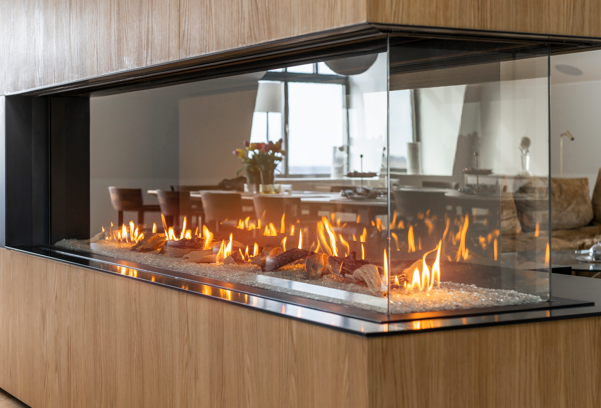
B‑Vent Gas Fireplaces use room air for combustion and push exhaust vertically through a single-wall pipe chimney. They’re relatively simple and cost-effective for traditional installations, but they are less efficient and must rely on vertical chimney space to vent. Direct‑Vent Gas Fireplaces are sealed systems that draw all combustion air from the outdoors and vent exhaust outside via a coaxial pipe. This design protects indoor air quality and allows for both horizontal and vertical venting. They are safe, highly efficient, and flexible in placement. They are perfect for modern homes that prioritize energy performance. Ventless Gas Fireplaces don’t require any venting system. They burn gas so cleanly at high temperature that they release minimal combustion by-products into the room. These units are highly efficient and easy to install but may face indoor air quality restrictions in some regions .
In the following sections, we’ll explore each of these gas fireplace types in more depth, covering how they work, their advantages and limitations, who they’re best for, and what they typically cost in real-world applications.
- B‑Vent Gas Fireplaces
- Direct‑Vent Gas Fireplaces
- Ventless Gas Fireplaces
B-vent Gas Fireplaces
A B-vent gas fireplace, sometimes called a “natural-vent” unit, is a gas appliance that uses room air for combustion and routes the flue gases straight up a dedicated vertical chimney. This design keeps the flame open to the room, so the fire looks much like a traditional wood hearth. The chief attraction is that welcoming, natural-looking flame pattern, which makes a B-vent model a strong aesthetic replacement for an old masonry fireplace while still giving owners the convenience of gas. Its disadvantages centre on performance: because the appliance pulls already-heated indoor air for combustion and sends it outside, overall efficiency is low and drafts can be created. A full vertical flue is mandatory, limiting where the unit can be placed and adding construction cost. Annual servicing of the burner and inspection of the chimney remain essential to ensure safe operation.
For consumers, a B-vent fireplace suits those who prize an open, authentic-looking flame and already have, or can easily add, a chimney. It is ideal when the fireplace is meant primarily for ambience rather than serious space heating. From the architect’s viewpoint, specifying a B-vent system means reserving a straight-up flue path, confirming adequate make-up air, and coordinating clearances to nearby finishes; it works best in traditional renovations or new builds where a vertical chase is already part of the design.
In the U.S. market, B‑vent gas fireplaces are mid‑range in cost compared to other gas options. Standard models typically start around $1,200-$2,500, with larger or more decorative units averaging $3,000-$5,000, and luxury designs or multi‑sided installations sometimes exceeding $6,000. Installation costs can add significantly, since a full vertical flue is required and may involve constructing a chase or relining an existing chimney; labor can range from $1,500 to $4,000 or more depending on complexity. Routine annual servicing should also be factored in as part of long‑term ownership costs.
Direct vent Gas Fireplaces
A direct-vent gas fireplace is a sealed-combustion appliance that pulls all of its combustion air from outdoors through a coaxial pipe and sends exhaust back out the same pipe, so no room air is used and the firebox remains completely sealed behind glass. Because the combustion circuit is isolated, a direct-vent unit converts far more of the fuel’s energy into usable heat, often well over 70 percent, and protects indoor air quality by keeping carbon-monoxide and moisture outside. The coaxial flue can run horizontally through a wall or vertically through a roof, giving architects far more placement freedom than a full masonry chimney, and the enclosed design makes the flame easier to control with thermostats or smart-home systems. Drawbacks include a higher purchase price than B-vent models, the need for a power supply to run the ignition and fans, and limits on flue length and elbows that must be observed in the layout.
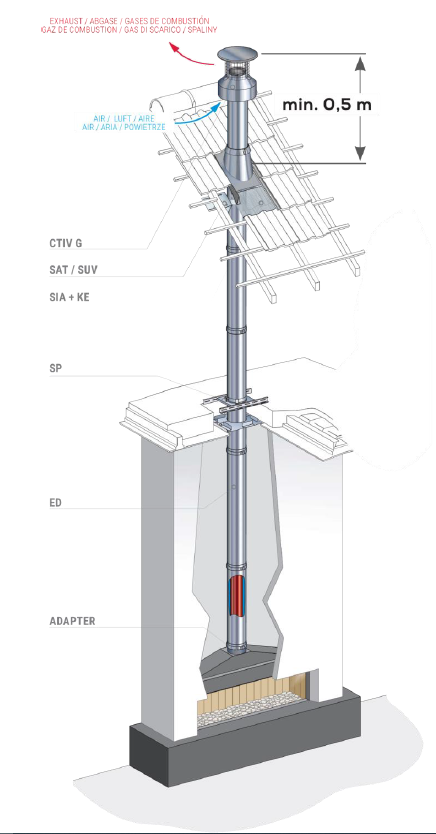
For homeowners, a direct-vent fireplace is the right choice when real flames and meaningful heat are required but safety, efficiency and low maintenance rank high on the wish-list, which is typical in energy-conscious renovations or new builds in colder climates. Architects appreciate that the sealed system meets tight-house air-exchange targets and lets them tuck the fireplace on almost any exterior wall without compromising the envelope.
Current U S listings show compact direct-vent gas fireplaces starting at just under $2,000 for basic 30-35-inch boxes. Mid-range models with wider fronts or corner formats typically run $3,500 to $7,000. Large linear or see-through designs sit in the $9,000 to $16,000 bracket, depending on width and finish options. Professional installation, covering the gas line, coaxial vent, and finishing work, adds roughly $1,200 to $6,000, so all-in project costs span about $4,000 on the low end to around $18,000 for statement installations .
Ventless Gas Fireplaces
A ventless gas fireplace is a sealed gas appliance engineered to run with no chimney or flue, burning natural gas or LPG so cleanly that the heat and combustion products are released directly into the room or, in the case of Planika’s outdoor line, into the open air of an outdoor space. This design eliminates the need for costly ductwork, making the unit almost “plug-and-play” from an installation standpoint. The great strength of a vent-free system is efficiency and freedom of placement: all generated heat stays on site, and the slim chassis can go where a vertical chase or perimeter wall simply doesn’t exist. Planika’s Galio and Galaxy inserts add smart-home connectivity, remote control and optional Wi-Fi, turning a patio wall or rooftop pergola into an instant focal point with true flames and no architectural compromises. The weaknesses centre on air-quality rules. Indoors, many North American codes either limit BTU output or ban ventless gas altogether, and even where allowed, additional room-air sensors or minimum ventilation rates are required. Moisture and trace by-products can build up in a tightly sealed envelope, so these fireplaces shine outdoors or in large, naturally ventilated spaces. Their open front also offers less protection from contact heat than a glass-sealed direct-vent unit.
For homeowners, a ventless gas fireplace is a practical choice when they want real flames and quick installation cost, especially in remodels, rental properties, or outdoor lounges where running a flue is impossible. Architects reach for the category when the brief demands a dramatic linear fire in a spot that a chimney could never reach, but they must confirm local regulations and specify adequate fresh-air supply if the unit will run indoors.
Planika’s 2025 price list lists the Galio Insert Automatic 1000 at $2,800 and the larger Galaxy 1150 Burner at $2,950 before tax and installation. These relatively moderate equipment costs, combined with the absence of flue requirements, help keep overall project expenses lower, provided that local regulations permit ventless gas use indoors or the installation is outdoors, where this line is designed to perform best.
3. Electric Fireplaces
There are five main styles of electric fireplaces including wall-mounted models, inset (built-in) units, stove-style freestanding heaters, basket-style fire baskets, and TV-stand combinations. Each one answers a different set of aesthetic and installation needs. Wall-mounted fireplaces hang like artwork, giving any flat surface an instant focal flame; inset units recess flush into a stud cavity for a clean, built-in look; stove-style electrics echo the charm of cast-iron wood burners while plugging into a standard outlet; basket-style inserts evoke the open-grate ambience of a period hearth; and TV-stand fireplaces merge media storage with a cozy visual centerpiece. Together they span everything from minimalist apartments to traditional cottages, delivering vent-free flexibility and cool-touch safety powered entirely by electricity. In the pages ahead, we’ll unpack each of these electric fireplace styles in turn, outlining how they generate their flame effects, the benefits and drawbacks you should weigh, the spaces they suit best, and the price brackets you’re likely to encounter.
- Wall-mounted Electric Fireplaces
- Inset Electric Fireplaces
- Stove-style Electric Fireplaces
- Basket-style Electric Fireplaces
- TV stand Electric Fireplaces
Wall-mounted Electric Fireplaces
A wall-mounted electric fireplace is a plug-in unit designed to hang directly on or slightly recess into a flat wall, producing an LED- or water-vapor flame effect and optional space-heater output without any chimney, gas line, or in-wall framing. Its chief advantage is simplicity: installation is usually as quick as fixing a mounting bracket and plugging into a 120- or 240-volt outlet, so even apartments or tightly insulated homes can gain a dramatic ribbon of “fire” with zero impact on the building envelope. Because there is no combustion, indoor-air quality and safety are excellent, clearances are minimal, and the slim chassis (often under 6 in/150 mm deep) suits contemporary interiors where floor area is at a premium. The trade-off is heat: resistive elements top out around 1.5-2 kW, making these units atmospheric first and supplementary heaters at best; the flame is also a visual simulation, which purists may find less “authentic” than real fire.
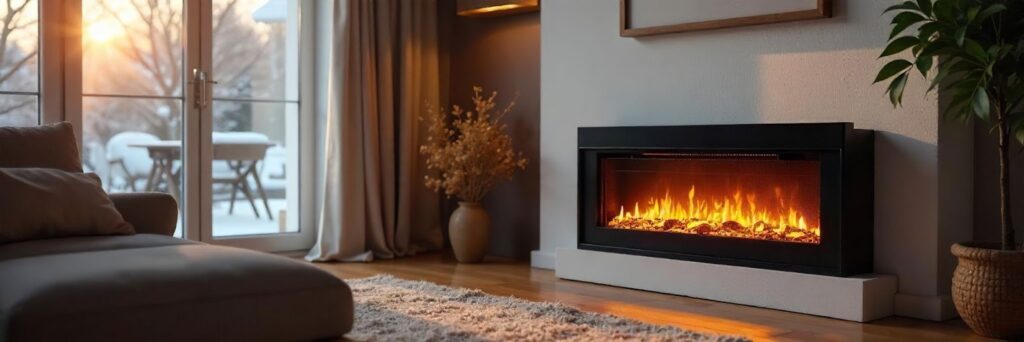
For consumers, wall-mounted electrics are ideal when ease of installation, modern aesthetics, and year-round ambience outweigh high heat output or media walls where a real flue is impossible. Architects appreciate their near-total placement freedom and the ability to integrate a focal line of fire beneath a television without breaching the vapor barrier; coordination boils down to supplying power and solid blocking for the bracket.
In the United States, wall‑mounted electric fireplaces are generally among the most affordable fireplace options. Entry‑level models with basic LED flame effects and simple heat output start around $200-$400, mid‑range units with multi‑color flames, remote controls, and slim recessed designs typically fall between $500-$1,200, and premium extra‑wide or water‑vapor models with advanced features can reach $2,000 or more. Installation costs are minimal since most plug directly into a standard outlet, making the total investment largely dependent on the unit itself rather than labor or building modifications.
Inset Electric Fireplaces
An inset electric fireplace is a plug-in unit engineered to recess flush into a stud wall or bespoke cavity, giving a clean, built-in look while producing an LED or water-vapour flame effect and optional fan-assisted heat – no chimney or gas line required. Its big plus is design integration: once framed and wired, the appliance sits level with surrounding finishes, freeing floor space and delivering a sleek ribbon of flame that can run with or without heat. Because there is no real combustion, clearances are minimal, indoor-air quality is unaffected, and maintenance is limited to the occasional dust-wipe. The trade-offs are moderate heat output (1.5-3 kW at most), reliance on grid power, and the need to open the wall or create a chase during installation.
From the consumer’s side, an inset model suits anyone seeking a permanent, contemporary focal point that feels custom-built: think condo owners remodelling a media wall, or families who want year-round ambience without managing fuel. For architects, the sealed chassis lets them place a fireplace under a television, inside joinery, or even in a tight-energy envelope without breaching the air barrier; coordination is largely about providing a 120- or 240-volt feed, cavity depth, and solid backing for the mounting brackets.
Inset electric fireplaces are generally priced well below vented gas or masonry wood units. Current U S retail listings put compact 34- to 40-inch models in the $1 400 – $2 500 range, while wider 50- to 60-inch linear inserts run around $3 000 – $4 000 before tax. These figures cover the appliance only; if the wall cavity is already framed and wired, installation typically adds just a few hundred dollars for mounting and trim. That modest outlay makes an inset electric fireplace one of the most affordable ways to achieve a flush, minimalist flame effect without the structural work demanded by wood or vented gas alternatives.
Stove-style Electric Fireplaces
A stove-style electric fireplace is a freestanding cabinet that echoes the look of a cast-iron wood stove but produces its flame effect with LEDs (or water vapour) and heat with a built-in electric element, so it needs only a standard power outlet and no chimney or gas line. Its chief attraction is charm combined with portability: you can set the unit in place, plug it in, and enjoy flickering “logs” plus roughly 5 000 BTU of supplementary heat, all while the exterior stays cool enough for family or rental spaces. Because there is no real combustion, clearances are minimal and indoor air quality remains unaffected, and owners avoid the mess and servicing demands of solid-fuel stoves.The trade-offs are modest heat output compared with larger built-ins, total dependence on grid electricity, and an aesthetic that suits cottage- or farmhouse-style interiors better than ultra-modern schemes. Flames are simulated rather than real, which may not satisfy purists seeking a genuine burn.
For consumers, a stove-style electric fireplace makes sense when they want an affordable, plug-and-play focal point that can move with them. It’s perfect for apartments, seasonal cabins, guest rooms or any space where venting is impossible. Architects specify these units to add visual warmth in secondary rooms, vacation properties or heritage renovations where breaching the building envelope is off limits; coordination amounts to confirming floor stability, a nearby electrical outlet and safe positioning clear of foot-traffic paths.
In the U.S. market, stove-style electric fireplaces generally fall in the $250 to $500 price bracket, though entry-level models can dip below $200 and premium cast-iron replicas can approach $900.
Basket-style Electric Fireplaces
A basket-style electric fireplace is a plug-in grate or “coal basket” insert that fits into an open hearth, using LEDs or water-vapor technology to create flames among faux logs or coals while a small fan heater (typically 1–2 kW) adds gentle warmth and no venting is required. The format keeps the look of a traditional open fire yet installs in minutes, making it ideal for period interiors where the original masonry opening is still exposed. Advantages include very low weight, minimal clearances, and the ability to run the flame effect without heat, so the grate can stay lit year-round for ambience. The main drawbacks are modest heat output enough for a sitting room but not whole-house heating and, because the grate is open to the room, slightly higher dust and heat loss than glass-fronted inserts.
For homeowners, a basket insert suits anyone who wants to revive a dormant fireplace with authentic style but without hauling fuel or sweeping chimneys; it is especially popular in apartments or heritage conversions where the chimney has been capped. Architects appreciate that the unit preserves the original hearth opening and needs only a concealed power spur, leaving masonry, plasterwork and air-tightness layers untouched.
Basket-style electric fireplace inserts are among the most affordable vent-free options. U.S. retail listings show that simple LED log-and-ember baskets start at under $150 (e.g., typical online prices around $95-$170). Mid-range grate sets with thermostats and deeper ember beds cluster between about $250 and $500, while high-design ultrasonic-mist baskets finished in cast metal can reach roughly $2,500 before delivery and tax.
TV stand Electric Fireplaces
A TV-stand electric fireplace is a media console that contains a built-in electric firebox and space heater, letting it support a television while adding flame effects and plug-in warmth without any chimney, gas line, or structural work. Because the cabinet and insert arrive as one piece, owners gain storage, cable management, and a visual focal point in a single package, and installers need only a standard 120-volt outlet.
The chief benefit is versatility: the unit doubles as furniture, hides set-top boxes behind doors or shelves, and can sit on any level floor without touching the building envelope. Most models let the flame operate with or without heat, so the console glows year-round and provides about 4 000 to 5 200 BTU of supplementary warmth on colder nights. Safety is high because the glass stays warm rather than dangerously hot, the housing remains cool, and automatic shut-offs prevent overheating.
Compromises include modest heating output compared with built-in inserts, a footprint that can crowd small rooms, and assembly time because many consoles arrive flat-packed. They also rely on grid electricity, so they stop heating during a blackout.
For consumers a fireplace media console suits living rooms where space for both an entertainment centre and a separate hearth is limited. Renters like its portability, and families value the cool-touch surfaces. Architects specify these units when a client wants the look of a media wall but the budget or lease terms rule out cutting into studs and adding venting.
Market listings in the United States show budget consoles starting just over $200 (for example, $209.99 in a current Amazon listing), mid-range units with wider inserts and LED lighting running between about $400 and $700 and premium stone-top or extra-wide designs reaching roughly $1 200 to $1 300. Installation is usually do-it-yourself or a modest assembly fee, so total project costs stay far below those of gas or wood systems that need framing and venting.
4. Ethanol Fireplaces
Ethanol fireplaces are available in four primary formats: freestanding units, tabletop burners, built-in inserts, and wall-mounted models. Each provides a real, clean-burning flame using bioethanol fuel and does so without the need for a chimney, flue, or gas connection, making them highly versatile for both residential and commercial interiors. While all share the same fundamental principle of clean combustion, they differ in size, installation requirements, heat output, and visual impact.
Freestanding fireplaces act as movable floor sculptures, easily repositioned without construction. Tabletop models create a cozy, decorative flame for indoor or outdoor use and can be placed on any stable surface. Built-in inserts are recessed into walls or furniture, creating a sleek architectural effect. Wall-mounted models hang like artwork and offer a flame display without sacrificing floor space.
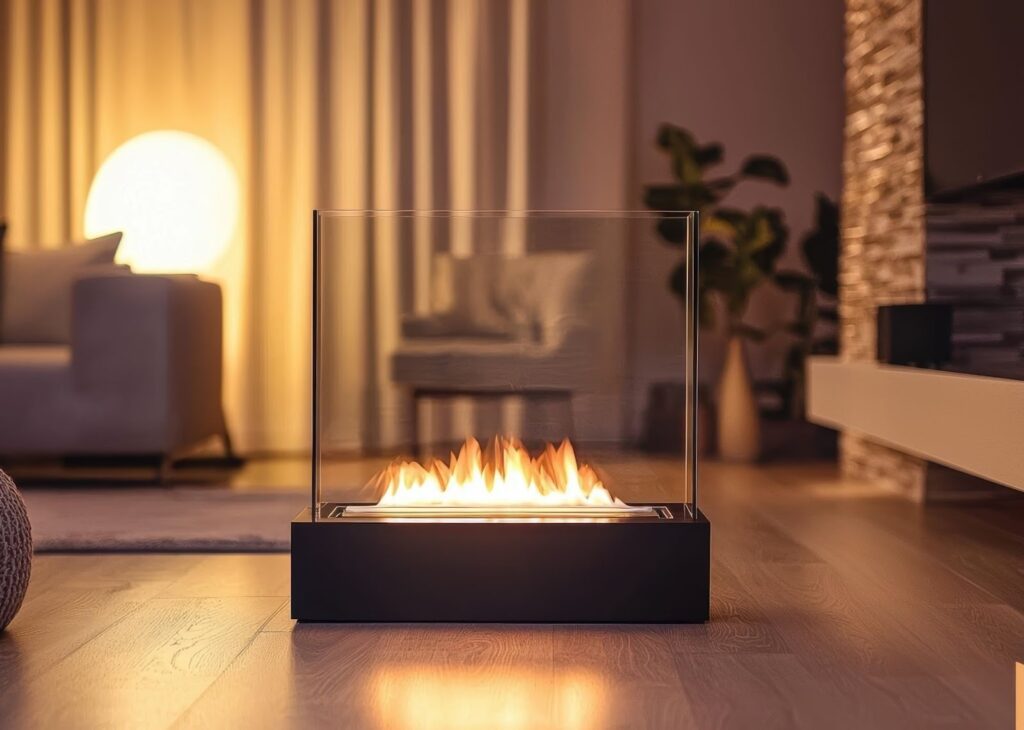
Each of these four formats can be equipped with one of three burner technologies. Manual fireplaces are the most basic, requiring the user to pour ethanol directly into an open burner and ignite it by hand. Semi-automatic systems improve user safety and convenience by using a sealed fuel tank, electric pump, and push-button ignition, often combined with tilt sensors and basic flame control. At the top of the range is BEV (Burning Ethanol Vapours), which is Planika’s patented technology that defines a new category in ethanol fireplace performance. Instead of igniting liquid fuel, BEV systems first vaporize the ethanol inside a sealed chamber, then ignite only the clean vapour. This eliminates any direct contact between the flame and the fuel, resulting in zero smoke, soot, or odor, along with longer, more efficient burn times. Flame height is managed electronically, and the entire system can be controlled via remote, app, or integrated with smart-home platforms.
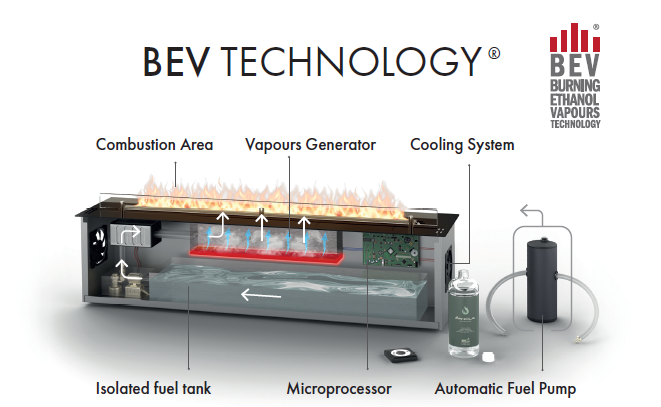
BEV technology is available across all four fireplace formats and is widely recognized as the safest, cleanest, and most advanced bioethanol combustion system on the market. This technology will be explained in more detail in a dedicated section later in the guide.
In the sections ahead, you’ll discover how each fireplace format works, what advantages and limitations to consider, who each type suits best, and the typical investment required depending on the chosen burner technology.
1. Freestanding Ethanol Fireplaces
2. Tabletop Ethanol Fireplaces
3. Built‑in Ethanol Fireplaces
4. Wall‑mounted Ethanol Fireplaces
Freestanding Ethanol Fireplaces
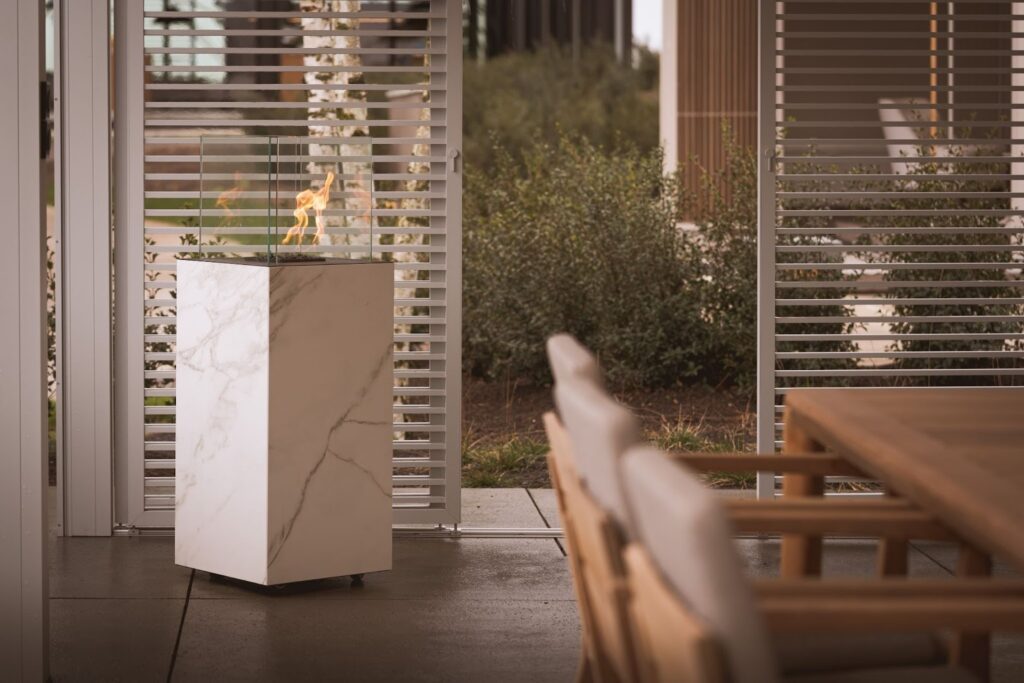
A freestanding ethanol fireplace is a self-contained floor unit that houses an automatic bioethanol burner inside a finished cabinet, delivering a real, clean flame without any chimney, gas line, or hard wiring and allowing placement almost anywhere on a level surface. Its strengths are flexibility and quick installation. Simply position the unit, plug it into a standard outlet, fill the tank, and it is ready within minutes. Combustion produces only water vapour and trace carbon dioxide, so there is no smoke, soot, or odour, clearances to finishes are minimal, and the fireplace can be moved later like furniture. Limitations include moderate heat output, typically 3 kW to 5 kW, and the need to refill the ethanol tank every several hours of burn time. Fuel costs vary by region, and although the flame is real it cannot match the high radiant heat of wood or the constant convenience of a plumbed gas line.
For homeowners this format suits anyone seeking an eye-catching centrepiece with zero construction mess, such as renters, loft dwellers, or boutique hotels that may rearrange layouts seasonally. Architects value it as a late-stage design upgrade that preserves airtight envelopes and heritage walls, or as a way to animate large open-plan areas without building a flue.
Planika’s latest list prices the Porto freestanding ethanol column, stone‑clad in Dekton Daze / Laurent / Kovik version comes in at roughly $3,200 before delivery and tax. Because these BEV® units are completely vent‑free and ship fully assembled, installation is generally limited to positioning the fireplace, plugging in the power cord for the control electronics, and filling the tank, so labour costs stay minimal compared with gas or wood systems.
Tabletop Ethanol Fireplaces
A tabletop ethanol fireplace is a compact, portable burner set into a small base, usually framed by a protective glass cylinder, that produces a clean bioethanol flame on any flat surface without plumbing, wiring, or a chimney. Its key advantages are mobility and instant ambience. You can move the unit from dining room to balcony in seconds, fill the modest reservoir, light it with a taper, and enjoy real flickering fire for up to two or three hours. Combustion is clean so there is no smoke, soot, or lingering odour, and the glass shield keeps the flame stable even in a gentle outdoor breeze. Maintenance is limited to wiping the glass and refilling fuel. Limitations come from size. Heat output is modest, typically no more than 1.5 to 2 kW, so it serves as an atmosphere rather than a primary heat source. The small tank needs refilling after each use, and because the burner is exposed, you must place it on a level surface away from children, pets, or flammable décor.
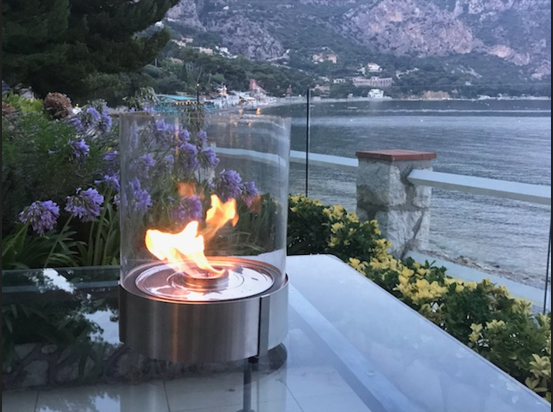
For homeowners a tabletop model fits renters, condo owners, and frequent hosts who want a striking centerpiece that moves easily between spaces. Interior designers use it to animate coffee tables, restaurant patios, or event venues when permanent construction is not an option. Architects specify tabletop burners as quick visual accents in lounges and hotel lobbies, knowing they require no structural changes or ventilation but do demand stable placement and basic safety briefing for staff.
Built-in Ethanol Fireplaces
A built-in ethanol fireplace is an automatic bioethanol burner designed to recess flush into a framed wall, cabinet, or partition, creating a seamless ribbon of real flame that vents only water vapour and trace carbon dioxide, so no chimney or gas line is required. Its main advantage is architectural integration. The burner hides inside a steel casing, leaving only the flame visible behind protective glass, which lets designers run a fire strip almost anywhere, including double-sided room dividers or beneath televisions. Safety sensors, remote control, and automatic refuelling pumps make daily use simple, and because combustion is clean the unit preserves airtight envelopes and indoor air quality. Drawbacks include a higher upfront cost than freestanding or tabletop models, the need for a 120- or 230-volt power feed, and some rough-framing work to create the niche and supply fresh air to the room. Heat output is moderate, usually 4 kW to 8 kW, so it acts as supplementary heat rather than a primary system, and the tank must be refilled periodically with bioethanol.
For homeowners a built-in model suits anyone planning a major renovation or new build who wants a permanent, high-end focal point without the complexity of a chimney. From an architect’s view it offers maximum design freedom because the burner can stretch up to two metres, curve through corners, or appear on both sides of a wall while leaving the building envelope intact; coordination focuses on cavity dimensions, power, and clearances to combustibles.
Planika’s 2025 lineup of built‑in ethanol fireplaces is represented by the FLA4 burner / and Forma series, which are designed for zero‑clearance installation directly into walls or custom cabinetry. These units use BEV® technology, producing a clean ethanol vapour flame with no chimney or flue required. Sizes range from FLA4 590 mm to 2490 mm, with heat outputs from 10 580 to 76 743 BTU/h and burn times of 5–10 hours depending on the model. Prices start at $4 600 for the FLA4 590 burner and rise to $18 450 for the 2490 mm model, while complete Forma fireplaces, including single‑sided, corner, three‑sided, tunnel, room‑divider, and island configurations, range from $5 800 for the 800 mm model to $21 850 for the 2700 mm version.
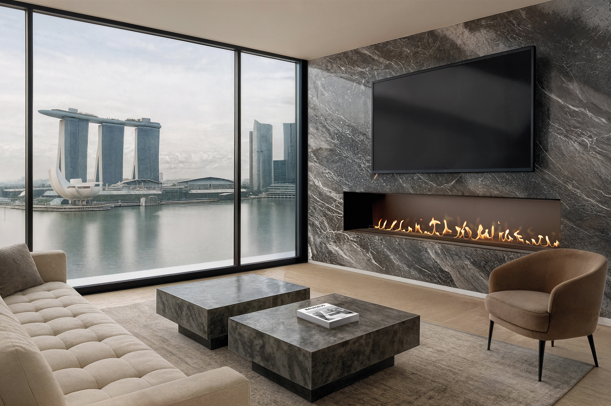
All built‑in ethanol fireplaces include remote and app control, six‑stage flame adjustment, automatic refilling, and optional glass screens or decorative trays with ceramic logs or stones. Installation is straightforward compared to gas or wood systems, requiring only a framed opening and access for the integrated electronics, with no venting or masonry chimney work needed
Wall-mounted Ethanol Fireplaces
A wall-mounted ethanol fireplace is a pre-cased bioethanol burner that fastens directly to a load-bearing wall, showing only a slim front opening and venting nothing but water vapour and trace CO₂, so it needs no chimney, gas line, or floor space. Its big advantages are footprint and speed. The cabinet projects just a few inches, freeing the floor and letting designers position real flame at eye level in apartments, corridors, or small living rooms. Because combustion is clean, clearances are minimal; day-to-day use comes down to topping up bioethanol and pressing the remote. Integrated safety sensors and automatic pumps handle ignition and refuelling. Limits include moderate heat output, typically 4 kW for a single-sided unit,the need for a power spur behind the wall, and solid backing to carry 30-50 kg of weight. Once installed the fireplace is fixed in place, and the tank still needs periodic refills.
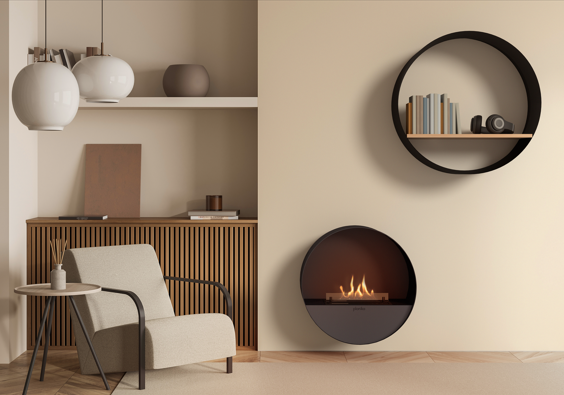
For homeowners this format suits anyone who wants a dramatic flame without sacrificing floor area or undertaking major construction, particularly condo owners and renters barred from adding flues. Architects specify wall-mounted burners to create a feature strip of fire on tight walls while leaving the building envelope intact; coordination focuses on blocking, a hidden electrical feed, and safe clearances to artwork or electronics above.
General U.S. pricing sits in the mid-premium range. Sale listings place a 34-inch wall-mounted ethanol fireplace at roughly $1 400 and a 35-inch version near $2 300, while larger or fully stainless units often list for up to $2 800 at regular price. Installation usually involves only mounting hardware, a recessed power cable, and minor wall touch-ups, so overall costs stay low and make this format an economical way to add real flame in spaces where venting is not possible.
5. BEV Ethanol Fireplaces
There are two main types of BEV ethanol fireplaces: indoor models and outdoor models. Both use Planika’s patented BEV (Burning Ethanol Vapours) technology, which vaporizes liquid bioethanol in a sealed chamber and ignites only the clean vapour. This eliminates smoke, soot, and direct contact between flame and fuel, offering a level of safety and control unmatched by other ethanol systems. Indoor BEV fireplaces are designed to integrate seamlessly into walls, cabinetry, or freestanding housings, making them ideal for modern living rooms, commercial interiors, and hospitality spaces. Outdoor BEV fireplaces extend the same advanced technology to terraces, patios, and open-air venues, using weather-resistant materials and fully enclosed systems to deliver real flames in places where gas or wood fireplaces may be impractical. In the sections below, we’ll look at each type in detail, outlining how they operate, where they are most effective, their unique advantages, and the price ranges you can expect when specifying BEV fireplaces for your next project.
1. Indoor BEV Fireplaces
2. Outdoor BEV Fireplaces
Indoor BEV Fireplaces
An indoor BEV fireplace is an electronically controlled ethanol burner designed for use inside residential or commercial spaces. It uses Planika’s patented BEV (Burning Ethanol Vapours) system, which heats liquid bioethanol in a sealed chamber and ignites only the clean vapour, eliminating smoke, soot, and direct fuel contact. This makes it ideal for settings that demand the highest levels of safety, air quality, and flame precision, without the need for a chimney or hard-piped gas line. Its chief advantage is flexibility in placement and design integration. Since there’s no flue or ventilation needed, the unit can be installed flush into a wall cavity, fitted inside custom furniture, or configured as a freestanding centerpiece. Flame height, ignition, and fuel levels are controlled electronically via remote, mobile app, or smart-home platforms. Models like Rock or Rock Core can be used in everything from luxury apartments and hotel lobbies to high-end offices, creating a striking visual feature with minimal construction effort. Limits include a reliance on electricity for operation, periodic refueling with bioethanol, and upfront appliance costs higher than those of simpler manual ethanol or electric systems. However, the payoff is a real, clean-burning flame that can run up to 20 hours on a single fill with almost no emissions or indoor air concerns.
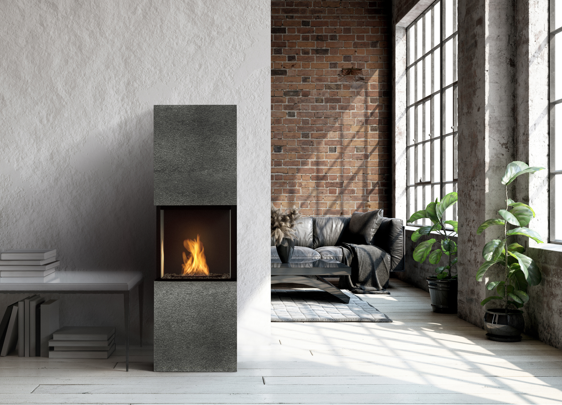
For designers and homeowners, indoor BEV fireplaces are best suited to new builds or renovations that prioritize aesthetics, ease of use, and environmental responsibility. Architects value their vent-free construction and the ability to install real flame without breaching airtight building envelopes.
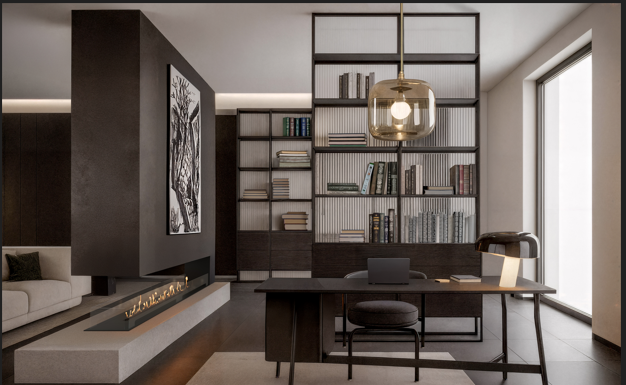
Planika’s indoor BEV® ethanol fireplaces are vent‑free, zero‑clearance units designed to be built into walls or room partitions, bringing a real flame indoors without a chimney or gas line. The 2025 lineup is led by the FLA4 burners and the complete Forma fireplaces. The FLA4 burners range from 590 mm to 2 490 mm, with burn times of 5–10 hours, or up to 30 hours with enlarged fuel tank, capacities from 0.82 to 3.91 gallons, and heat outputs from 10 580 to 76 743 BTU/h, priced $4 600–$18 450 depending on length. The Forma series, which integrates these burners into factory casings for single‑sided, corner, three‑sided, tunnel, room‑divider, and island installations, starts at $5 800 for the 800 mm model and reaches $21 850 for the 2 700 mm island version. All indoor BEV® fireplaces come with remote and app control, six‑stage flame regulation, automatic refilling, and optional glass screens or decorative trays with logs or stones. Installation requires only a framed opening and basic power supply, keeping overall project costs modest compared with vented gas or wood systems.
Outdoor BEV Ethanol Fireplaces
An outdoor BEV ethanol fireplace is a weather-rated appliance that creates real flames by vaporizing bioethanol in a sealed chamber, producing no smoke, soot, or direct contact between flame and fuel, making it one of the safest open-fire options for exterior environments. Planika’s outdoor BEV fireplaces bring their patented Burning Ethanol Vapours technology to garden patios, rooftop terraces and hotel outdoor lounges. These models include the Porto, Cabo Burner, Cabo Fireplace, and Cabo Table, all rated for both interior and exterior use. They vaporize ethanol in a sealed system, so flames remain clean, no smoke, soot, or direct fuel exposure, and operate with full electronic control via remote or app.
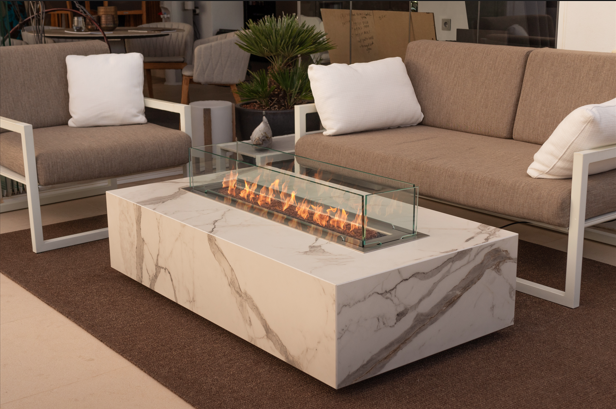
Outdoor BEV settings use weather-resistant housings and spill-proof designs, making these units ideal when gas or wood fires are impractical or restricted. Units like Porto feature tempered glass wind guards, sealed electronics and wheels for portability. Fuel tanks are fully enclosed and offer automatic dosing, flame-height adjustment, and built-in safety sensors. Benefits include installation flexibility (no chimney or vent needed), long burn time (up to 14 hours per fill), and real flame ambiance in outdoor spaces while meeting high safety standards. Limitations include reliance on electricity and ethanol fuel refills, plus a preference for sheltered placement in extreme weather. For residential exterior areas, outdoor BEV fireplaces add luxurious warmth in a smoke- and ash‑free format. In commercial hospitality, they boost outdoor seating zones with elegant flame displays without the infrastructure needs of gas or wood. Architects specify these units when design freedom, code compliance and user safety are priorities.
Planika’s outdoor BEV® ethanol fireplaces are designed for open‑air use without a chimney, combining weather‑resistant materials with the same vent‑free BEV® technology found in their indoor models. The 2025 lineup includes the Cabo and Porto families. The Cabo Burner measures 1 190 × 280 × 449 mm, holds 2.77 gallons of ethanol, runs for up to 15 hours, and produces a maximum of 32 070 BTU/h, with a list price of $4 950. Its full table variant, the Cabo Table (1 400 × 760 × 504 mm), extends the burner into a lounge‑height surface with Dekton finishes, priced at $7 200. For a smaller footprint, the Porto column stands 1 147 mm high on a 400 mm square base, burning 1.32 gallons for 14 hours at 12 621 BTU/h, priced at $2 100, while the Porto Daze / Laurent / Kovik stone‑clad versions list at $3 200. All outdoor BEV® models are plug‑and‑play, ship fully assembled, and require only positioning and filling the tank. No flue, gas line, or complex framing is needed, making installation fast and low‑cost for terraces, patios, and open‑air lounges.
6. Water Vapour Fireplaces
There are three main styles of water vapour fireplaces, including linear steam cassettes, built-in models, and freestanding ready-to-use units. Each one serves a distinct architectural or decorative purpose while providing the same safe, ultra-realistic flame effect. Linear cassettes are modular inserts that can be joined end-to-end for long ribbons of mist-lit fire; built-in units offer a flush, integrated look perfect for commercial or high-end residential spaces; and freestanding fireplaces deliver plug-and-play ambience without the need for venting, gas lines, or renovation work. Together, they offer the cleanest, coolest flame illusion on the market. They are ideal for wellness spaces, hospitality venues, modern homes, and anywhere safety and aesthetics must coexist. In the following sections, we’ll break down each of these vapor fireplace types, showing how they work, their visual and functional impact, the ideal locations for use, and the price ranges you can expect.
1. Linear Steam Fireplace Cassettes
2. Built-in Water Fireplaces
3. Freestanding Ready-to-Use Water Fireplaces
Linear Steam Fireplace Cassettes
A linear steam fireplace cassette is a modular insert that uses water vapour and LED lighting to create a cool-to-touch, ultra-realistic flame effect. Designed to recess flush into walls, cabinetry, or bespoke furniture, these cassettes produce zero heat, smoke, or combustion byproducts, meaning no flue, chimney, or gas line is required.
The main advantage is design flexibility. Units like the Cool Flame Insert and Cool Flame PRO can be installed individually or linked end-to-end to form long, uninterrupted ribbons of mist-lit flame. Customizable LED lighting, app and remote control, and silent operation make them ideal for public spaces where safety, low maintenance, and aesthetic control are top priorities.
Limitations include the need for access to distilled water (typically via a refillable reservoir), dependence on electricity, and the absence of heat output; these are visual-only fireplaces. Installation also requires a flat niche, water management planning, and occasional maintenance to prevent scale buildup.
For residential and commercial clients, linear steam cassettes work best in modern interiors that prioritize safety and spectacle over heat. Hospitality venues use them to create dynamic focal points without affecting room temperature or triggering fire codes. Architects value their modular design, as it allows for maximum customization without structural intrusion; integration revolves around cavity prep, electrical access, and ambient lighting coordination.
Planika’s Cool Flame 500 Insert is listed at $2,335, and the longer Cool Flame 1000 Insert is $3,025 before tax and delivery. These linear steam fireplace cassettes are only 316 mm deep, run for up to 12 hours on a single water tank, and feature Opti‑mist flame technology with ActiveLED lighting, remote control, flame‑color adjustment, sound effects, and home perfume. Because they are completely vent‑free and zero‑clearance, installation typically involves only preparing a wall recess or custom enclosure, keeping overall project costs far below those of traditional gas or wood fireplaces while delivering a modern, high‑ambience visual effect.
Built-in Water Fireplaces
A built-in water fireplace is a vapor-based unit designed for permanent installation inside walls, architectural niches, or custom cabinetry. Like steam cassettes, these fireplaces use distilled water and LED lighting to create a lifelike flame effect without generating heat, smoke, or combustion byproducts. Because there’s no real fire, they require no venting, chimney, or gas connection.
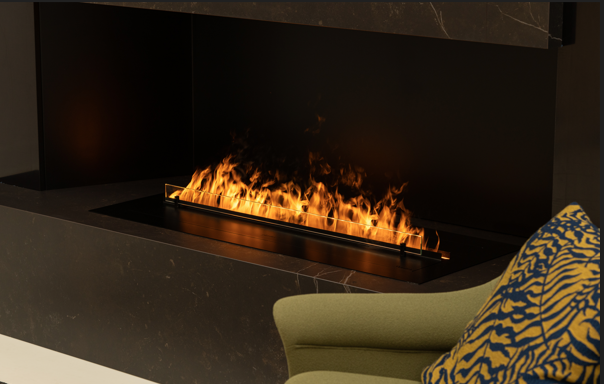
The primary advantage is architectural cohesion. Built-in water fireplaces recess fully into the surrounding structure, delivering a clean, linear look that blends seamlessly with modern interiors. They provide the visual drama of fire without the technical and regulatory challenges of open flame, making them ideal for spaces with strict safety codes or limited ventilation options. App and remote controls enable easy adjustment of lighting effects and mist intensity, while sealed water tanks and silent operation support low-maintenance use in both residential and commercial settings.
Drawbacks include the absence of any heat output and the need to regularly refill the water reservoir with distilled water. Although setup is simpler than gas or wood systems, installation still involves electrical wiring, cavity framing, and access for service and refills. As such, they are best suited for projects where flame is a visual feature rather than a heat source.
From a homeowner’s perspective, built-in water fireplaces offer a compelling solution for media walls, minimalist living rooms, or wellness spaces where air quality and fire safety are top priorities. For architects, these units provide maximum design freedom—flame effects can span full walls or be integrated into recessed panels without breaching fire codes or building envelopes. Integration focuses on cavity sizing, moisture management, and concealed power access.
Planika’s Cool Flame Fireplace series offers built‑in water‑vapour fireplaces in 500 mm ($2,855) and 1000 mm ($3,545) sizes before tax and delivery. These units are zero‑clearance, only 380 mm deep, and operate for up to 12 hours on a single tank, producing a realistic Opti‑mist flame enhanced by ActiveLED lighting, remote control, flame‑color adjustment, sound effects, and optional aromatherapy. Because they require no venting, combustion clearance, or complex framing, total installation costs remain modest, making them an attractive choice for creating built‑in, high‑ambience fireplace features without the complexity of gas or wood systems.
Freestanding Ready-to-Use Water Fireplaces
A freestanding water vapor fireplace is a fully assembled, plug-and-play unit designed to deliver a highly realistic flame effect using ultrasonic mist and LED lighting. These units emit no heat, no smoke, and no combustion byproducts, making them ideal for interiors that require high safety, zero emissions, and elegant visual impact. They simply connect to standard power and run on distilled water, with no venting, chimney, or gas lines required.
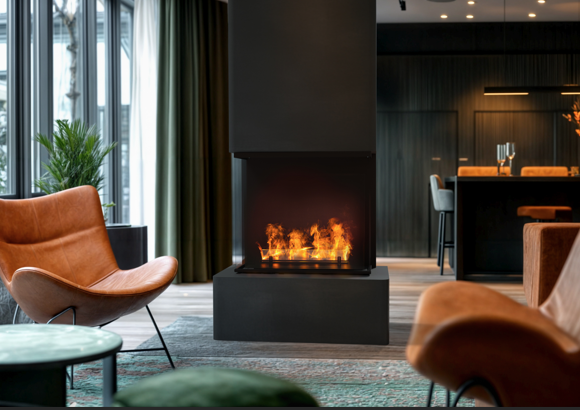
The key advantage is simplicity. With no framing or installation work needed, these fireplaces can be placed anywhere near a socket and moved as needed. They are ideal for apartments, commercial lounges, rental properties, and seasonal decor changes. Models like Misty, Steamy, and Aura combine minimal modern design with features like remote control, mobile app connectivity, multicolor flame palettes, and decorative log sets.
Planika’s Aura fireplace, for example, uses the Cool Flame 500 burner and Optimyst technology to create an almost indistinguishable illusion of real fire. It adds thoughtful touches like ActiveLED lighting, crackling wood sounds, home perfume, and easy tank refilling. A dual-glass open-sided design gives it visual lightness and complements contemporary spaces.
Limitations include the absence of heating capability and the need to refill the water tank every 8-10 hours. However, maintenance is minimal, and safety is unmatched, especially in public or wellness environments where traditional flames are off limits.
For designers and property owners seeking a sensory experience without the constraints of gas or solid fuel, these water fireplaces provide unmatched design freedom. From wellness studios to boutique hotels or open-concept living rooms, they offer style, serenity, and visual impact.
Planika’s freestanding, ready‑to‑use water‑vapour fireplaces combine plug‑and‑play convenience with decorative flame effects. The AI 500 is priced at $3,145 and the larger AI 1000 at $4,530, while the taller Aura model lists for $3,385 before tax and delivery. These units are fully self‑contained, require no venting or framing, and operate up to 12 hours per tank using Opti‑mist technology with ActiveLED lighting, remote control, flame‑color adjustment, sound effects, and aromatherapy. Installation is as simple as positioning the fireplace and filling the water tank, making them an effortless way to add a modern, high‑ambience feature to any interior.
How to Choose the Right Fireplace Type?
In this section, we will cover all the key factors you need to weigh when choosing a fireplace: its primary purpose; site and venting limits; maintenance and fuel logistics; safety and local rules; aesthetic fit; and budget and timeline. We will finish with a simple decision framework to help you select the perfect wood, gas, electric, or ethanol option for your project.
Purpose
The first, and often most decisive, question is why the owner wants a fireplace at all. In some homes, especially large, open-plan houses in colder climates or mountain lodges, the unit must provide real, sustained heat. That pushes the specification toward high-output systems such as closed-hearth wood stoves or direct-vent gas fireplaces, both capable of delivering 15 kW or more for hours at a time. By contrast, most urban apartments and new, well-insulated houses already rely on central heating. In those settings the fire’s primary mission is to create atmosphere and supply a gentle comfort boost on chilly evenings. Ethanol inserts, freestanding ethanol pieces, quality electric panoramas, and vent-free gas fireplaces, all in the 3- to 8-kW range, excel here: they give the eye-catching flame but never overheat a room that is otherwise stable. Finally, some projects want nothing more than a decorative focal point. Think a tabletop burner flickering during dinner or a slender electric ribbon glowing behind a hotel reception desk. Defining the purpose up front instantly rules certain technologies in or out and prevents costly, under-used installations later.
Site and Venting Limits
Buildings themselves impose hard boundaries on what can be installed. If an existing masonry chimney runs through the house, it opens the door to traditional open- or closed-hearth wood appliances, as well as classic B-vent gas units that rely on vertical draft. Where a new flue can be routed horizontally or at a shallow rise to an exterior wall, direct-vent gas becomes the favourite: its coaxial pipe both supplies combustion air and removes exhaust without stealing heated indoor air. But many projects, high-rise condos, historic town-house renovations, retail fit-outs, offer no realistic path for any kind of vent. In these cases vent-free technologies are the only practical choices. Electric inserts need only a power feed; ethanol burners require a receptacle for the liquid fuel and standard safety clearances to combustible finishes. Outdoors the rules relax further: patio designs can incorporate vent-free gas or ethanol burners of large size, confident that open air disperses any by-products immediately.
Maintenance and Fuel Logistics
A fireplace’s romance can fade quickly if upkeep proves burdensome. Wood remains the most labour-intensive: operators must source or store dry logs, remove ash after every burn cycle, and book annual or semi-annual chimney sweeps to clear creosote. Gas is cleaner, yet it still calls for a yearly service visit to check valves, sensors, and vent integrity. Ethanol eliminates soot and chimney maintenance entirely, but because the tank lasts only a few hours at full flame it must be refilled usually with an automatic pump for each event. Electricity demands virtually no maintenance beyond the occasional glass wipe; however, owners should know that the heater and flame effect shut off during a power outage unless there is backup power. Understanding day-to-day routines and fuel availability in advance ensures the chosen fireplace enhances lifestyle rather than becoming a chore.
Safety and Local Rules
Regulatory requirements differ by jurisdiction and fuel type. In many U.S. states and Canadian provinces, vent-free indoor gas fireplaces are capped at specific BTU levels or disallowed altogether to safeguard indoor-air quality. Wood appliances must meet chimney-height rules, setback distances from combustibles, and spark-arrestor specifications, especially in wildfire-prone regions. Ethanol and gas burners alike need verified clearances and adequate fresh-air supply in very airtight buildings. Electric inserts sidestep combustion concerns but must still comply with electrical codes for dedicated circuits and outlet placement near water sources such as kitchens or bathrooms. Early consultation with local building authorities or at minimum with a certified installer avoids redesigns, delays, and unexpected permitting fees.
Aesthetic Fit
Beyond function, a fireplace often anchors the entire visual narrative of a room. Traditional interiors with panelled walls and stone mantels usually benefit from the deep glow of log sets, either real wood or high-definition gas, or basket-style electric inserts that mimic coal grates. Contemporary schemes, on the other hand, call for a razor-thin ribbon of flame stretching along a media wall or floating inside a double-sided partition. Ethanol and modern direct-vent gas burners excel here, as do ultra-wide electric panoramas. If the fireplace must also house audiovisual equipment, a purpose-built TV-stand electric console integrates flame, storage, and cable management in one furniture piece. Matching flame character, form factor, and finish materials to the surrounding décor prevents costly visual clashes and elevates the overall design language.
Budget and Timeline
Cost considerations fall into two layers: equipment price and installation scope. Custom masonry hearths including the chimney often reach and exceed USD 10 000. Direct-vent gas systems, once the flue route, framing, and gas line are counted, commonly range from USD 10 000 to USD 16 500. Built-in ethanol inserts start close to USD 4 600, while inset electric panoramas usually remain below USD 4 000 even with professional labour. Freestanding ethanol pieces lie between USD 3 100 and USD 7 500, depending on finish and size; tabletop burners can be as little as USD 150. Installation time tracks cost: wood and gas units may add weeks to the schedule for venting, framing, and inspections; ethanol and electric often install within a day, and freestanding or console-style models can be fully operational within an hour.
How to Decide
Write down the room’s primary heating or decorative goal, list any structural or venting constraints, gauge your appetite for ongoing maintenance, and verify local safety standards. Then align flame style with the interior concept and confirm that the total expense, both now and over ten years of fuel or electricity, is acceptable. By following this sequence, you arrive at a fireplace choice that harmonises comfort, safety, aesthetics, and cost, ensuring the finished feature lives up to its promise of warmth and lasting value.
FAQ about Different Types of Fireplaces
In this section you will find simple answers to the questions people ask most often when choosing a fireplace type. We cover which styles are most popular, what each type usually costs, how hard they are to install, how much heat they give, and which options save money in the long run. Use these quick facts to decide which fireplace best fits your home, budget, and comfort needs before you look at specific models.
What type of fireplace is most popular?
Today the most popular choice is the direct-vent gas fireplace. Homeowners like it because it shows a real flame, delivers steady heat, and keeps indoor air clean by drawing combustion air from outside and sending exhaust the same way. A remote or wall switch starts the fire instantly, and the glass-sealed front means there is no ash or smoke inside the room. For many families it offers the charm of a traditional hearth with far less daily work than burning wood.
How much do wood fireplaces cost?
Wood fireplaces cost between 3 000 and 14 000 USD, depending on the construction approach. A factory-made wood stove or prefab firebox with its double-wall metal chimney typically runs 3 000–8 000 USD installed, including basic labor. A full masonry hearth built from brick or stone, complete with a dedicated chimney and reinforced footing, generally falls in the 7 000–14 000 USD range once materials, skilled labor, and finishing touches such as a mantel are added. Don’t forget to budget for annual chimney sweeps and the cost or effort of stocking seasoned logs over the long term.
How much do gas fireplaces cost?
Vent-free outdoor burners start at roughly 2 500 USD. A standard B-vent unit that ties into a vertical flue averages about 11 000 USD installed. Direct-vent gas models vary by size and style: a compact 1.2-meter unit often costs around 10 000 USD, while extra-long linear burners stretching more than two meters can reach 16 500 USD before decorative stone or tile surrounds. Gas service line fees and an annual safety check are additional but modest.
How much do electric fireplaces cost?
Electric fireplaces cost between 200 USD and 4,000 USD, depending on the style and installation. Wall-mounted or fully recessed inserts with realistic flame effects and basic wiring run from 1,400 to 4,000 USD. Media-console units that combine storage with a small firebox begin just above 200 USD and rarely exceed 1,300 USD. Freestanding electric stoves styled like cast-iron wood burners sit in the 250 to 500 USD range. Because they need no venting, most electric models can be installed as a simple DIY project or with only minimal labour.
How much do ethanol fireplaces cost?
A small tabletop burner that sits on a dining table begins around 150 USD. Freestanding floor models with built-in safety sensors and automatic pumps range from roughly 3 100 to 7 500 USD, depending on size and finish. Built-in ethanol inserts that recess flush into walls start close to 4 600 USD for shorter units and can reach about 10 500 USD for designs nearly two meters long. Operating costs depend on how often you run the flame and local bioethanol prices.
What is the easiest fireplace type to install?
An electric fireplace is the simplest to add because it needs only a standard household outlet. Hang the unit on the wall or slide it into a prepared opening, plug it in, and enjoy the flame effect immediately. If you prefer real fire, a freestanding or tabletop ethanol model comes next in ease: position it on a stable surface, fill the tank with liquid fuel, and light it without any venting or special wiring.
Which type of fireplace puts out the most heat?
High-efficiency wood stoves and closed-hearth wood fireplaces produce the greatest heat, often exceeding 15 kW, enough to warm a large open room or a smaller entire house. Direct-vent gas fireplaces follow closely, offering similar heating power but with precise flame control and less daily upkeep. Ethanol and electric fireplaces give gentler warmth, making them better for supplementary heat rather than a primary source in very cold weather.
What fireplace type is the most cost-effective?
Electric units and small vent-free gas burners cost the least to buy and install. Over many seasons, natural-gas fireplaces are usually the cheapest to operate in areas where gas prices stay low. Wood can be economical if you have a reliable, low-cost supply of seasoned logs, though annual chimney maintenance adds to the bill. Ethanol is pricier per hour of heat, but in apartments and remodels where adding a chimney would be very expensive, its vent-free design can make it the most practical and ultimately cost-effective solution.